Electroplating Water Treatment Equipment
Specify pure water, rinse-water reuse and wastewater treatment for plating. Review ES-PRO equipment scope and prepare water analyses for a quotation.
In brief: ES-PRO water treatment equipment covers pure-water production, rinse-water reuse and wastewater treatment for electroplating plants. These are separate duties: define the inlet stream, required outlet quality and destination for each one before selecting equipment or combining modules.
Send a project inquiry — mention "Electroplating Water Treatment Equipment" in the message. To attach analysis reports, use the equipment-specific email checklist below.
Request a water-treatment quotation
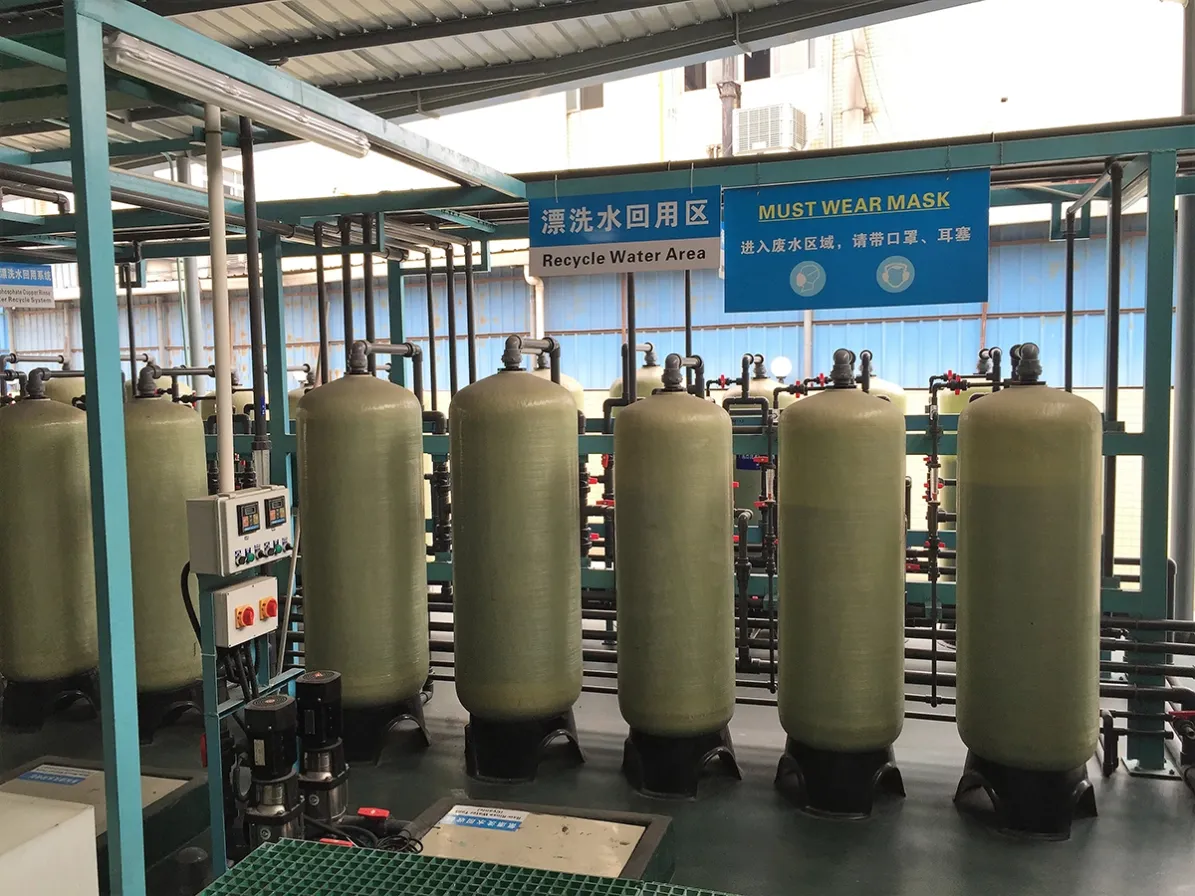
Catalog photograph — water-reuse area: treatment vessels, pipework and local controls. This reference image does not establish project performance. View the full photograph.
Choose the duty before choosing the system
The ES-PRO water equipment catalog lists the following families. The final treatment sequence and included equipment depend on engineering assessment of the actual water streams.
Request a project process-flow proposal and equipment list identifying inlet and outlet requirements, controls, consumables, waste outputs and utility connections. A standard treatment sequence is not specified on this page.
Map the enquiry boundaries: identify these connections for engineering review, rather than treating them as a supplied process design.
Identify where residual waste would go.
Identify waste-handling responsibilities.
Connections to confirm for your project. This is an enquiry map, not a supplied treatment design.
An existing plant may need only one duty upgraded. State whether the enquiry is for a standalone module, a retrofit or coordinated systems for a new plating line.
Why the streams need separate information
Feed water, dilute rinses and concentrated process effluent have different treatment objectives. Identify the source tanks and substances present before proposing collection, segregation or reuse. Disclose any chromium, cyanide, complexing agents or unusual contaminants to the specialist assessing the treatment process.
The plant's process specialist should approve any reuse destination. Do not assume that water acceptable for one rinse stage is suitable for a plating bath or a more demanding final rinse.
Prepare a water-treatment enquiry
If you do not yet have an analysis report, start by sending your process or bath types, a list of the water streams and any existing reports through the quotation link. Ask ES-PRO to propose the analysis and sampling information needed for each duty. Your responsible process specialist should agree the sampling plan before arranging laboratory work; do not guess a test panel or infer water quality from a photograph.
- Feed water: a recent analysis, seasonal variation, available pressure and the source of supply.
- Production demand: average and peak flow, operating hours, storage needs and water-quality limits at each use point.
- Rinse streams: source process, collection arrangement, typical flow, analysis and intended reuse destination.
- Wastewater: representative analysis, average and peak volume, batch discharges and known metals or other contaminants. Identify any regulated or hazardous streams separately.
- Site and utilities: available space, electricity, drains, ventilation, access for maintenance and connections to existing tanks.
- Discharge requirements: country, site and receiving system, with the applicable limits or permit conditions supplied by your responsible specialist.
- Project boundary: which tanks, pumps, controls, dosing, waste handling and commissioning activities belong in the supplier's scope.
For each report, include the stream ID, sampling point and date, normal or abnormal operating conditions, measured constituents with units, and the intended use or receiving-system limits. The project engineer must confirm which tests are needed. If analysis or destination requirements are missing, arrange those inputs before asking for a treatment guarantee.
Illustrative enquiry format: “Rinse stream A: 3 m³/h average, 5 m³/h peak, 8 operating hours/day; sample A taken from the collected rinse stream during normal production. Intended reuse: first rinse. Analysis report and target water-quality limits attached to the email. Requested scope: recovery module, storage and controls; identify utility connections and concentrate handling.” These numbers illustrate an enquiry format; the project's design basis comes from your measurements.
Define acceptance before comparing quotations
Agree the feed conditions and the required outlet quality for each duty. Include the sampling points, laboratory or measurement method, test duration, flow range and handling of off-specification water. For reuse, compare the recovery target together with the required water quality; a high recovery figure alone does not establish process suitability.
Also identify consumables, waste outputs, operator tasks and planned maintenance. Confirm these items in the project proposal rather than assuming that every module has the same operating cost or service needs.
Connect water treatment to the production line
Review demand alongside gantry-type electroplating equipment or circular vertical equipment. Batch and shift scheduling determine peak water demand and storage needs. Agree tank-level signals, pump permissives and off-specification-water handling with the automation control engineering scope.
For the wider equipment picture, see what equipment is needed for electroplating.
Buyer questions before choosing water equipment
Can one system cover pure water, rinse reuse and wastewater treatment?
Do not assume so. Each duty has different inlet conditions, required quality and destination. Ask for a duty-by-duty proposal showing any coordinated modules, their interfaces and the separate acceptance basis.
Can treated rinse water return to a final rinse or plating bath?
Only after the responsible process specialist approves the required water quality for that use point and the measured stream has been assessed. A recovery target alone does not show that the water is suitable for a more demanding use.
Can an enquiry start without a laboratory report?
Yes. Send process or bath types, a stream list, intended destinations and any existing records. Ask for the duty-specific sampling and analysis information needed to develop a proposal. Final treatment commitments require an agreed design basis and acceptance method.
Evidence and next step
The manufacturer's water equipment catalog supports the DI, EDI, reuse and wastewater equipment families. The catalog photograph shows a water-reuse area; it does not establish flow, recovery rate, outlet quality or a project delivery result. Ask for duty-specific data sheets, a proposed flow diagram and a sampling and acceptance plan that state the feed conditions.
Send your water-treatment requirements
Request a water-treatment quotation
The email link identifies the equipment family and opens a fillable enquiry checklist. Attach analysis reports in your email application. You can also use the contact form; include the equipment name in your message.
For supplier evaluation, ask to review the proposed flow diagram, equipment data sheets, sampling and acceptance-test plan, utility schedule and operating tasks for your duty. Confirm which documents or project references ES-PRO can disclose, and agree measurable acceptance conditions before ordering.
Ask for any configuration example to state its feed conditions and operating limits; it is not a guarantee for a different water stream.