
Circular Vertical Electroplating Equipment
Plan a circular vertical plating line for repeatable workpiece handling. Review transfer, tank, ventilation and capacity assumptions before requesting an ES-PRO proposal.
In brief: Circular vertical electroplating equipment arranges automatic handling around a repeatable plating route. It is worth assessing when the workpieces, rack arrangement and process sequence are relatively stable. Line capacity and coating results still depend on the parts, bath schedule and agreed acceptance method.
Send a project inquiry — mention "Circular Vertical Electroplating Equipment" in the message. To attach drawings or reports, use the equipment-specific email checklist below.
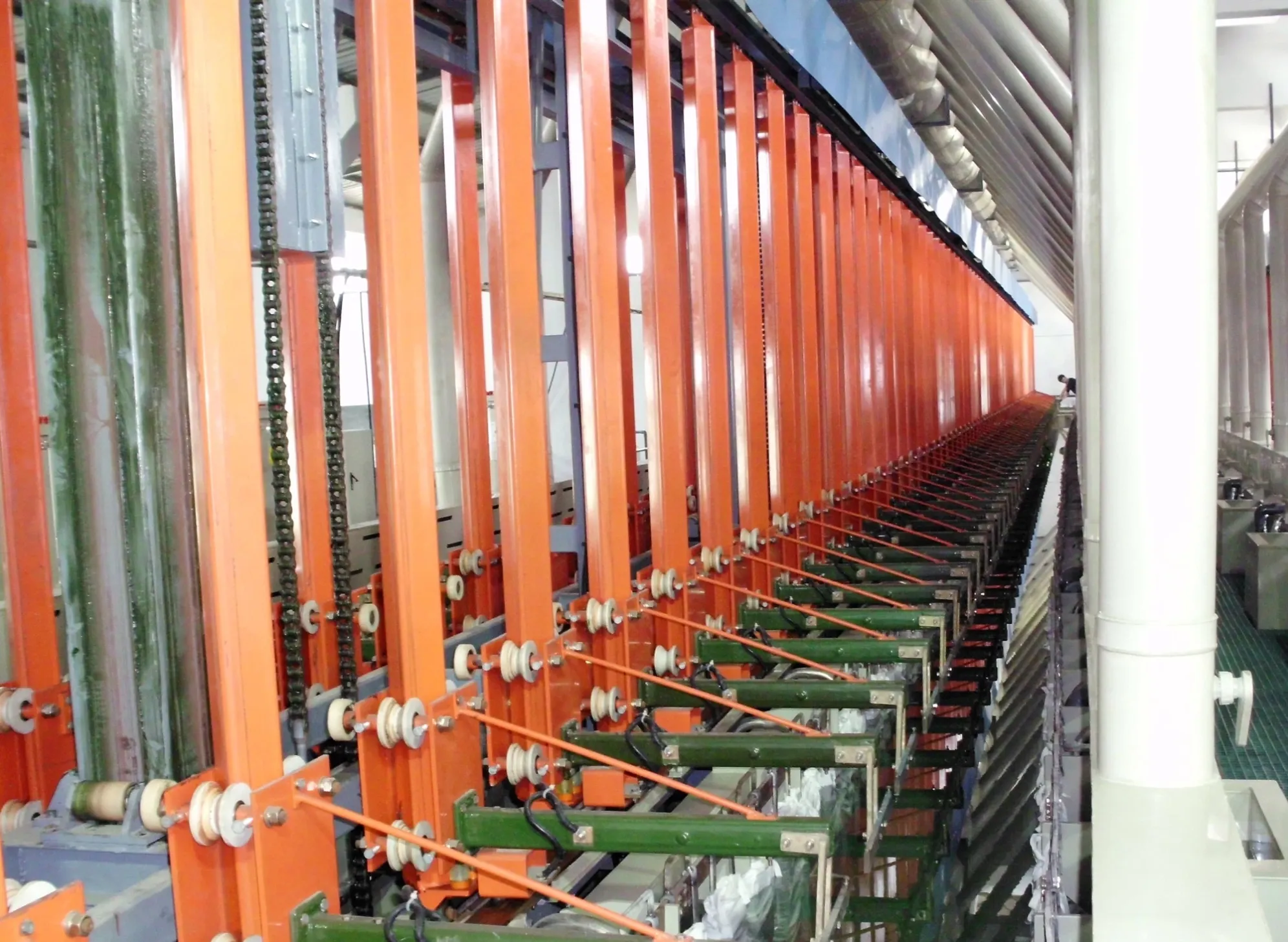
Catalog image: the vertical-lifting line photograph shows an overhead handling arrangement and process stations. It is an equipment-family reference, not a confirmed layout for your plant. View the catalog image.
Decide whether this layout fits the production mix
The ES-PRO circular vertical catalog describes automatic loading and unloading, a structured tank body, canopy ventilation, counterflow circulation and anode arrangements. Treat these as catalog design features to discuss; the quotation must say which are included. The source presents this family for repetitive production with a relatively uniform process route. If you run many part families with frequent route changes, also compare a gantry plating line.
Start the comparison with a parts matrix. For every part family, list substrate, finish, size, weight, rack positions and required stages. Mark the production share and changeover frequency. This makes the handling choice more useful than a headline “high-capacity” description.
Define the configuration and interfaces
Ask the supplier to show the proposed transfer path and tank sequence on one drawing. For loading, specify fixture geometry, electrical contacts, drip time and the hand-off between operator or upstream conveyor and line. For tanks, request usable dimensions, material, agitation, heating or cooling and maintenance access. For extraction, identify canopy or local capture, duct connection and responsibility for the downstream treatment system. For controls, agree sequence logic, fault response and interfaces with automation control engineering.
The catalog mentions a pre-bent steel-frame tank design, counterflow circulation and interconnected anodes. Those descriptions do not prove coating uniformity or establish a standard tank schedule. Ask what drawing, trial or measurement will validate the proposed arrangement for your parts.
Compare output using the same assumptions
Supply the number of parts per rack, racks per transfer, planned operating hours, dwell-time range and expected changeovers. Ask for the completed-load interval, limiting process stage and line availability assumptions. A supplier may quote a mechanical transfer cycle that is different from production output; request both values and their units. If the route includes drying or curing, include industrial baking equipment in the timing and utility review.
Request a project quotation
Send part drawings or photographs, coating and thickness requirements, the rack concept, expected production mix, site dimensions and utility list. Request a layout, equipment schedule, included/optional scope table and a proposed factory and site acceptance plan. Confirm who supplies rectifiers, water systems, extraction ducting, installation and commissioning. No model dimensions, throughput or performance guarantee are claimed here because these have not been verified for a specific line.
Email the circular vertical line brief. You can also use the project inquiry form; put “Circular Vertical Electroplating Equipment” in the message.