
Gantry Plating Line Equipment Overview
Review ES-PRO gantry plating equipment, handling choices, scope boundaries and RFQ inputs. Compare a project-specific line proposal before requesting a quotation.
In brief: A gantry plating line uses overhead transfer to move racks, barrels or other approved carriers between process stations. ES-PRO lists gantry equipment for varied, smaller-batch work. The handling method, tank sequence and plant interfaces are selected against the actual parts and coating process, rather than from a fixed page specification.
Send a project inquiry and name “Gantry-Type Electroplating Equipment” in the message. For drawings or a detailed technical brief, use sales@electroplating-equipment.com.
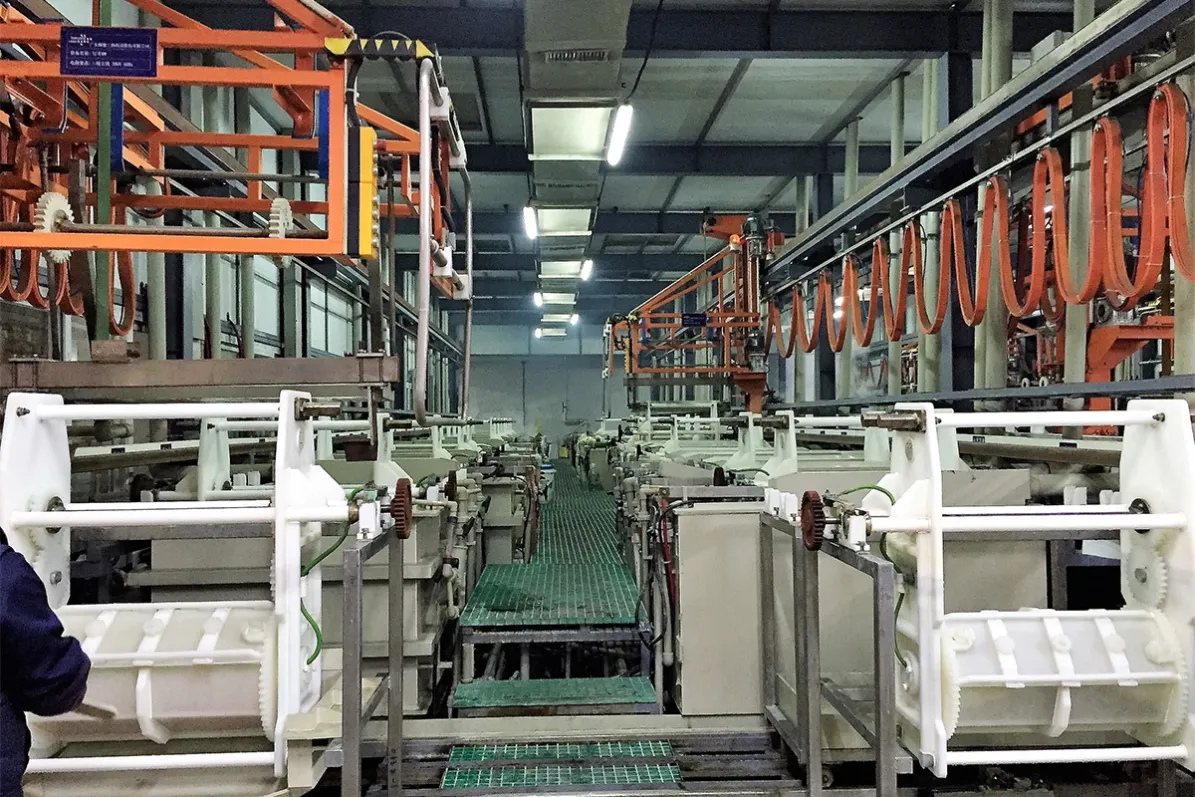
Image note: The product photograph shows a catalog barrel-plating installation with overhead handling and process tanks. It is a reference to the equipment family, not a drawing of the line offered for your project.
Define the work before the line layout
Send the substrate, part dimensions and mass, target finish, expected batch quantity, production hours and required process stages. Identify which surfaces need plating or protection and whether contact marks or tumbling are acceptable. These inputs determine whether rack, barrel or another handling arrangement merits review. The ES-PRO gantry equipment catalog describes handling choices and possible provisions; it does not establish one standard configuration for every application.
Compare the equipment and supply boundary
Ask each proposal to show the station schedule, carrier and hoist arrangement, tank materials and dimensions, transfer sequence, electrical and rectifier interfaces, controls, exhaust collection, liquid catchment and drainage where applicable. Mark each item as included, optional, supplied by the customer or pending engineering confirmation. Site access, floor area, utilities and installation responsibilities should be stated on the same drawing or schedule. Where the line connects to automation control engineering or water treatment, agree the signal, pipework and acceptance boundaries between packages.
Agree how output and acceptance are measured
A statement such as “parts per hour” is incomplete without parts per load, process time, transfer time, planned operating hours and the product mix. Ask for a capacity calculation tied to representative parts and an acceptance plan covering handling, process operation, utilities and the agreed inspection criteria. Plating quality also depends on the approved chemistry, rectifier and operating conditions; a product-family page cannot guarantee a coating result for an unspecified workpiece.
Next step for your enquiry
Use the gantry configuration and quotation guide for a more detailed handling checklist, scope comparison and buyer questions. Send the project inquiry with part drawings, target finish, estimated batch size and site constraints. ES-PRO can then identify the information needed for a project-specific layout and equipment list.