
Precision Electroplating Equipment
Explore precision electroplating equipment planning for complex parts. Define coating, handling, bath and inspection requirements for an ES-PRO proposal.
In brief: Precision electroplating equipment is configured around a defined workpiece, coating requirement and inspection method. ES-PRO's catalog discusses flow field, electrical distribution, chemistry and environmental conditions; none establishes a universal tolerance or a preselected production line.
Send a project inquiry — mention "Precision Electroplating Equipment" in the message. To attach drawings or reports, use the equipment-specific email checklist below.
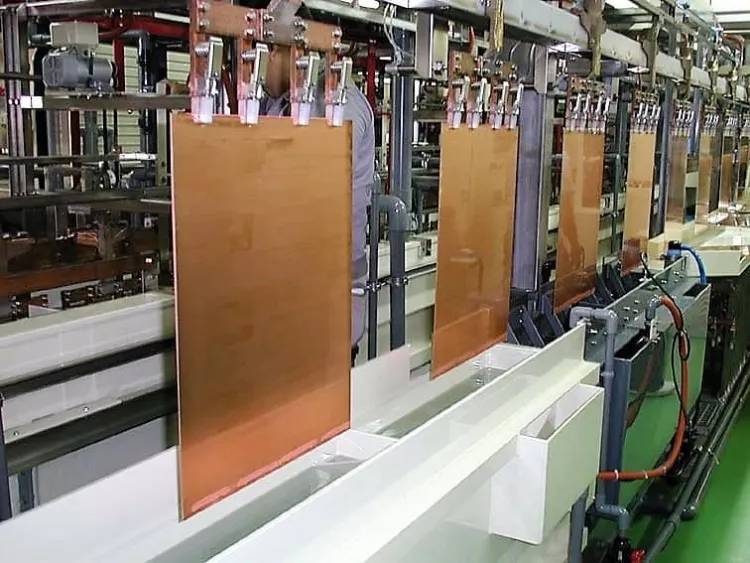
Catalog image: the pictured VCP line shows suspended sheets and process stations. It illustrates one possible configuration, not proof that the same line suits probes, ceramics or medical components. View the image.
Start with the part and its acceptance criteria
Supply a controlled part drawing, substrate, active plating area, critical surfaces, allowable contact marks and coating specification. State the thickness measurement locations and method, cosmetic or functional defects to reject, and sampling plan. If the application is regulated, provide your own validation and documentation requirements; listing an industry in the manufacturer catalog is not a certification of the equipment or finished component.
Make the difficult geometry visible. Blind holes, edges, recesses, delicate features and varied part orientations can drive current distribution, solution exchange and fixturing decisions. Ask what trials or simulation data are available before accepting a promised result. Do not convert a material or industry example into an assumed process recipe.
Review the proposed equipment boundary
Request a process-flow drawing, station schedule and handling concept. Discuss agitation or circulation, anode arrangement, filtration, bath monitoring and environmental controls for the actual chemistry. Specify how rectifiers, water treatment, extraction and automation controls connect to the line. For each item, mark included, optional, customer supplied or pending engineering review.
The catalog says ES-PRO evaluates flow field, electrical field, solution behavior, particulates, temperature and humidity. These are design considerations, not proof of a particular coating result. The proposal should name the governing assumptions, equipment documents and checks that will test the finished system.
Set a measurable trial and acceptance plan
Agree sample parts, loading pattern, bath condition, operating window and inspection method before a demonstration. Record thickness distribution, visual criteria and other specified properties against agreed locations and units. If a trial is not possible before quotation, ask which uncertainties remain and how they will be resolved before final acceptance. A useful proposal identifies responsibility for tooling, test pieces, chemistry, laboratory measurements and retesting.
Send a useful project brief
Include part drawings, coating and acceptance specification, annual or shift demand, intended loading method, site constraints and existing process information. Request a layout, equipment list, interface schedule and validation-document list. The pictured VCP configuration is only a reference; request evidence relevant to your part family.
Email the precision plating brief. The project inquiry form is another route; name this equipment family in your message.