
Plating Exhaust Treatment Equipment
Plan plating-fume capture, ductwork and treatment around measured sources and local limits. Send airflow and chemistry inputs for an ES-PRO proposal.
In brief: Electroplating exhaust treatment equipment connects emission-source capture, ducting, a selected treatment train and verification. The equipment and acceptance criteria must be chosen for the actual bath chemistry, airflow and local discharge requirements.
Send a project inquiry — mention "Plating Exhaust Treatment Equipment" in the message. To attach drawings or reports, use the equipment-specific email checklist below.
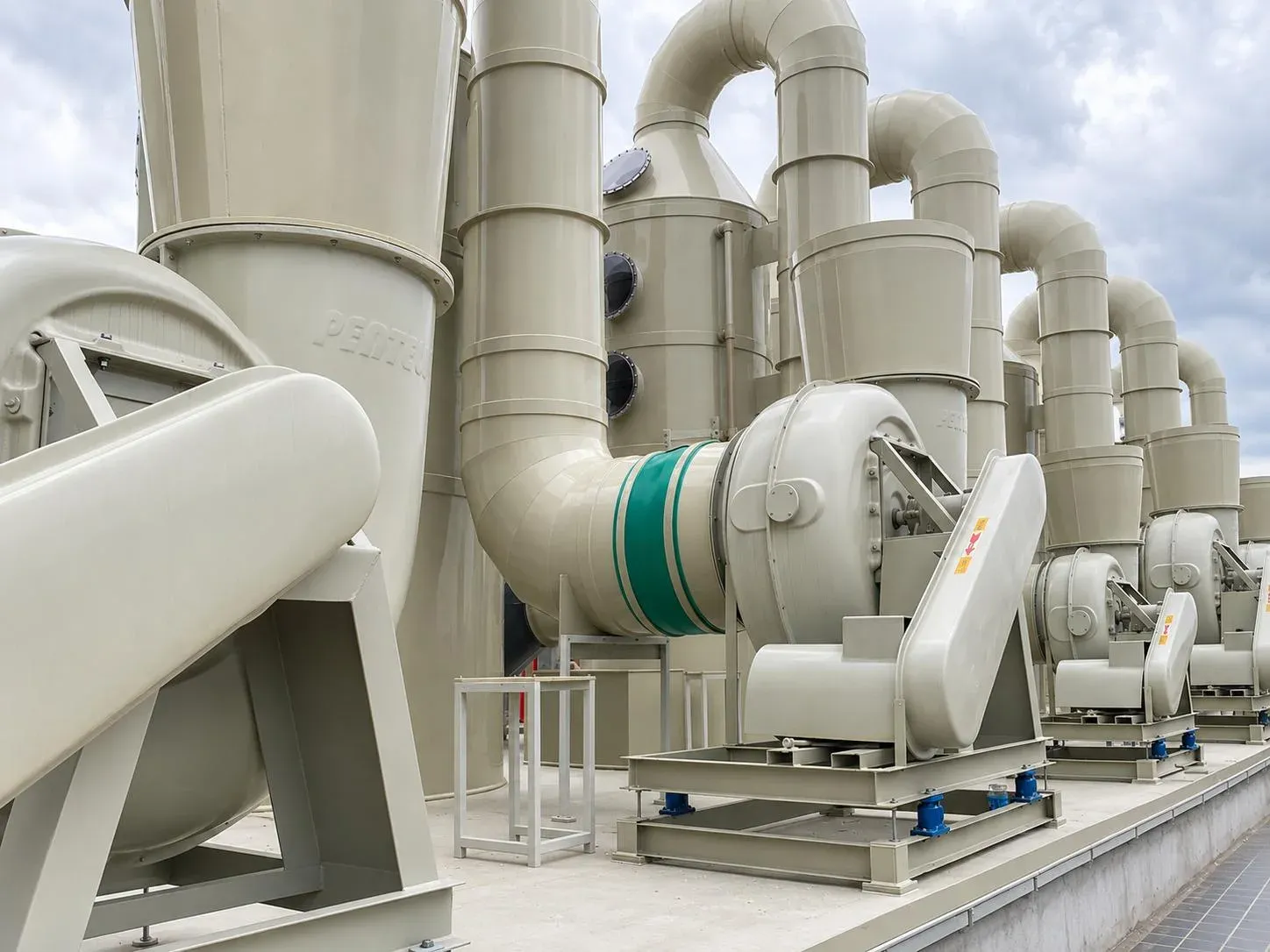
Reference photograph: the cover shows an industrial exhaust-treatment installation with vertical vessels, ductwork and fans. It illustrates the equipment family; it does not document the proposed configuration, capture efficiency or compliance for your plant.
Identify the sources before selecting treatment
The ES-PRO environmental-treatment catalog discusses capture and treatment for acid or alkaline exhaust, chromium mist, cyanide-related streams and organic vapors. These categories do not imply that the streams may be combined or treated with one device. Have a qualified process and environmental specialist document bath composition, temperature, additives, operating schedule and possible simultaneous emissions for each source.
Request measured or design-basis exhaust flow, hood position, tank opening and capture requirements. Identify the route to the treatment area, available space, materials exposed to corrosive conditions, and maintenance access. The catalog mentions PPS, PVC and FRP in system construction; the project specification must select materials against the actual chemical and temperature duty.
Separate four supply boundaries
- Source capture: hood or enclosure geometry, make-up air and operator access.
- Transport: duct layout, fan selection basis, drains and isolation points.
- Treatment: process train, utilities, reagents or consumables, and secondary waste handling.
- Verification: sampling points, instruments, test conditions and the responsible party for local approval.
Ask the supplier to show which elements are included, optional or supplied by others. Coordinate any liquid wastes or washdown with the water treatment system. For a new plating line, review the canopy or tank enclosure and exhaust route with the line layout rather than treating it as an afterthought.
Define acceptance with the local specialist
Provide the applicable permit or receiving-system limits and the required measurement method. Agree the operating state during the test, source load, sample locations and responsibility for laboratory analysis. No capture efficiency, discharge concentration or guaranteed legal compliance can be inferred from this catalog page. Any performance commitment belongs in the project proposal with stated inlet conditions and an acceptance protocol.
Request an exhaust-treatment proposal
Send a bath and process list, source layout, existing hood or fan data, destination country, local limits and the available utility schedule. Request a process-flow drawing, equipment and materials schedule, utility and waste-output list, and maintenance plan. If measured source data are unavailable, ask what survey or sampling is needed before final equipment selection.
Email the exhaust-treatment brief. Or use the project inquiry form and identify the exhaust system.