Plating Lines & Equipment
Reel-to-Reel Plating: Feed, Coverage and Acceptance
Reel-to-reel plating equipment should be specified from the feed material, reel and tension constraints, plated-area drawing, approved process and acceptance methods. Define the complete pay-out path.
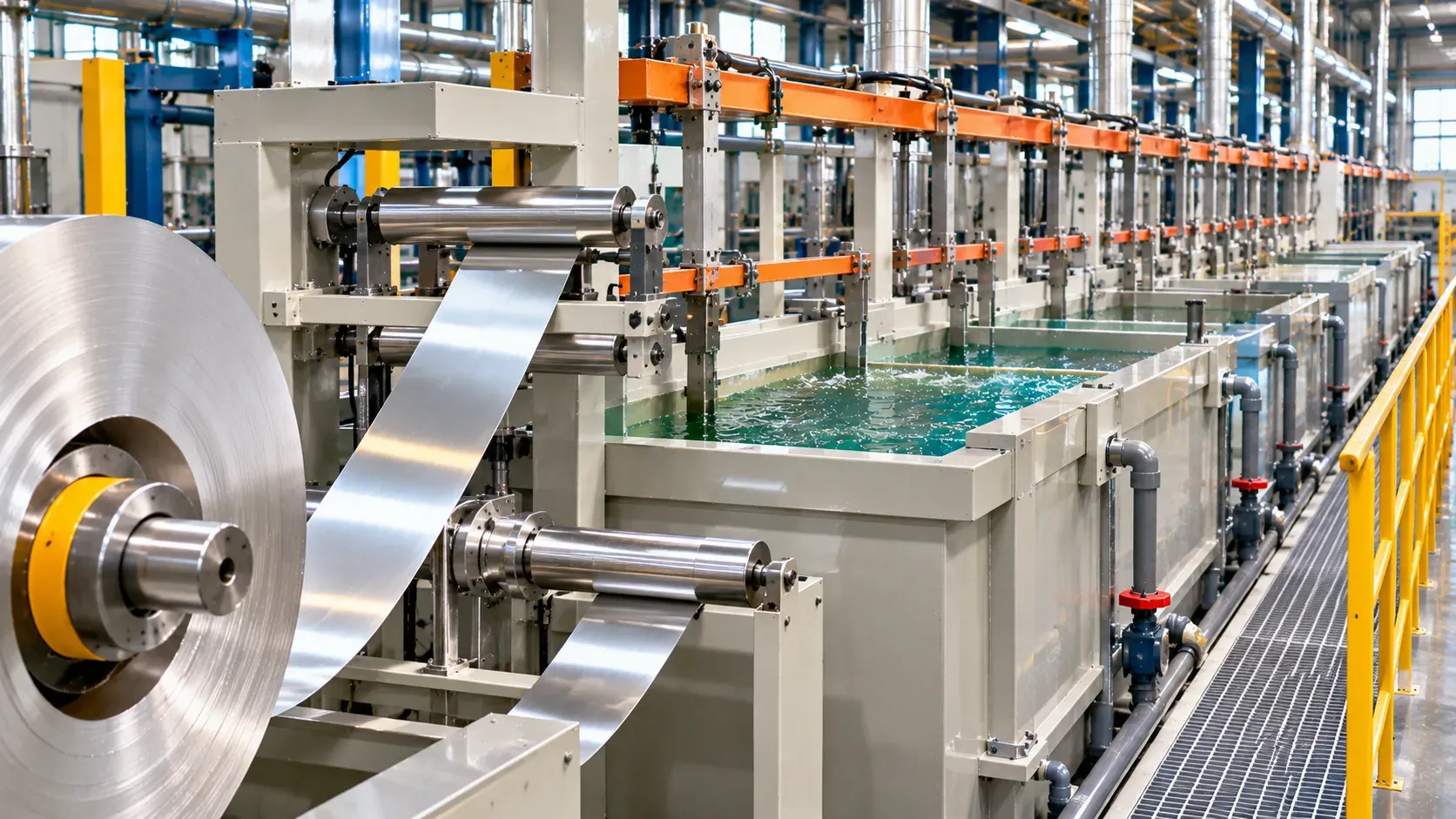
Reel-to-reel plating equipment should be specified from the feed material, reel and tension constraints, plated-area drawing, approved process and acceptance methods. Define the complete payout-to-take-up boundary and the required operating range. A line-speed figure alone does not establish accepted output, selective coverage or compatibility with the supplied strip or wire.
Feed & reel limitsProcess & coverageInspect & take up
Original editorial enquiry framework. Conceptual inputs, not an engineered layout or measured result.
This guide is for buyers assessing a continuously fed production project. Begin with the material and coating drawing. A conveyor carrying individual components and equipment processing reel-fed material have different feed arrangements. Confirm the actual requested configuration and supplier scope before treating a generic continuous-line photograph as evidence of suitability.
Which strip or wire feed data belong in a reel-to-reel plating RFQ?
Provide material grade, width or diameter, thickness where applicable, surface condition and the form in which material arrives. Include reel dimensions, core information, loaded weight and any restrictions imposed by the upstream or downstream operation. Identify splices, joints or carrier features that the feed assessment must accommodate.
State the tension and deformation limits approved by the product authority. Where these have not been established, mark them for assessment. The equipment proposal should explain which feed conditions it assumes and which require material trials before confirmation.
Describe the product mix rather than only the easiest reel. Record the changes between families and the operations involved in changeover. A proposal intended for one feed geometry should not be assumed to cover another geometry without a stated assessment.
How should selective coverage be specified for reel-to-reel plating?
Mark the plated and protected regions on a drawing referenced to identifiable material features. State the required deposit, thickness acceptance locations and allowable boundary variation. Identify which faces, edges, holes or contact areas form part of the requirement.
For electrodeposited gold where the agreed specification calls for it, the official ASTM B488-18(2025) record provides coating-specification context. It does not define a reel-feed design or validate selective-area accuracy. The component drawing and agreed process establish the coverage and inspection requirements for the project.
RFQ item | Information to supply | Evidence requested from the offer |
|---|---|---|
Feed material | Grade, geometry and incoming condition | Stated compatible feed range and unresolved trial needs |
Reel interface | Core, reel dimensions and loaded weight | Payout/take-up boundary and handling assumptions |
Tension/deformation | Approved limits and measurement basis | Proposed control and monitoring responsibilities |
Coverage | Plated/protected-area drawing and tolerances | Proposed positioning/masking approach for assessment |
Process duty | Approved stages and operating requirements | Residence-time and electrical/service assumptions |
Inspection | Thickness/coverage locations and acceptance method | Measurement boundary, records and release responsibility |
This original worksheet is an enquiry framework, not an engineered feed path, dimensioned layout or statement of an ES-PRO standard offering.
How should reel-to-reel speed and plating residence time be compared?
Give the required output with units and the operating pattern used to calculate it. Distinguish accepted product output from material passing through the equipment. Include startup, stops, changeovers and the inspections that determine release.
Ask how the proposed operating speed relates to the approved processing requirements. The supplier should state the process-zone assumptions and the material range associated with its proposal. A maximum transport speed is not automatically the production speed for the required deposit and acceptance condition.
Separate process feasibility from feed handling. Successful movement of a reel through equipment demonstrates that feed trial under its recorded conditions. The coating and coverage requirements need their own evidence. Use our gold-plating application guide for application context when gold contact areas are part of the drawing.
Which feed interruptions and material events should a reel line handle?
Discuss starts, controlled stops, reel changes, splices and abnormal feed conditions with the process and equipment designers. Identify the material that may need segregation following each event and the authority that releases it. The proposed records should preserve those events rather than making interrupted material appear continuously processed.
Ask how reel or batch identity connects to process and inspection records. Define the information required to locate the affected material and the practical means of retaining that identity through later handling. A general “traceability” feature description is insufficient without the factory's retrieval questions.
Review access and changeover tasks. State who handles incoming reels, prepares the feed, changes fixtures or process settings, and retrieves accepted output. These tasks influence the capacity assessment and the space required around the equipment.
What should a reel-to-reel plating proposal and trial demonstrate?
Request a full interface schedule: payout, feed/tension control, process cells, rinsing/drying as required, inspection and take-up. Mark which functions are included, optional or supplied by another party. Add electrical, water, extraction and drainage connections to the same boundary discussion.
The European Commission JRC surface-treatment reference supplies EU technical background for surface-treatment installations. It does not confirm a supplier's particular feed configuration, product accuracy or permitted site operation.
Agree a representative feed and coating demonstration before acceptance. Specify the material, reel condition, plated-area drawing, operating sequence and inspection locations. Record normal operation and the selected start/stop or material events relevant to the factory. The outcome should identify demonstrated conditions and remaining limitations.
For an upgrade, document retained payout, take-up, controls and inspection equipment. Use the quotation scope guide to compare integration and commissioning responsibilities. The equipment setup checklist supports the wider site-service assessment.
Questions You May Have:
Is every continuously handled plating line reel-to-reel?
No. Identify how material is supplied and collected. Reel-fed strip or wire needs a feed and reel-interface assessment distinct from individually carried workpieces.
Does maximum line speed establish accepted monthly output?
No. Use the approved process, feed range, operating schedule, interruptions and release requirements to assess accepted output.
Is selective-area accuracy an automatic equipment feature?
It needs an agreed drawing, boundary tolerance, feed condition and verification method. Confirm the proposed configuration and demonstration for the actual material.
Can an introduction proceed before tension limits are known?
Yes. Provide the material and existing upstream/downstream information. Mark the limits as unresolved so the required assessment can be identified.
Get Proposal and Demo
Introduce your reel-fed project with the known material, coating area and output objective. Company, name, email and project country are required; technical details are optional. Ask ES-PRO to assess the requested feed configuration, confirm the proposed supply boundary and identify a relevant material demonstration.
Reel information, marked drawings and inspection requirements can follow by sales email, or chat on WhatsApp. The equipment scope is confirmed against the project rather than inferred from a general line description.
Image note: AI-generated cover illustration; not an ES-PRO installation, customer project or test result.