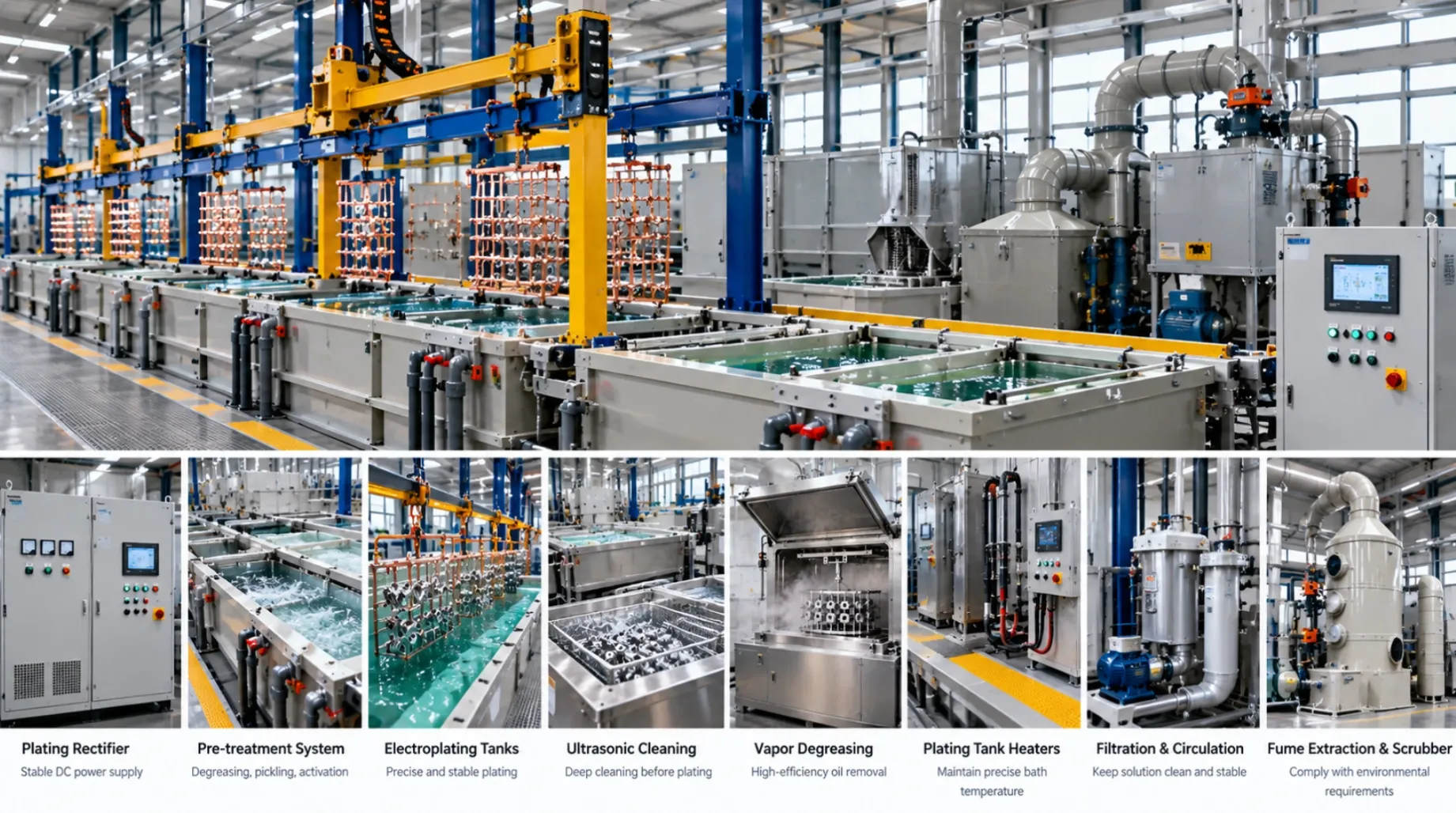
Plating Line Recipe Changeover and First-Rack Release
Plan a plating line recipe changeover with a defined last rack, first rack and release check. Record shared stations, fixtures and production evidence.
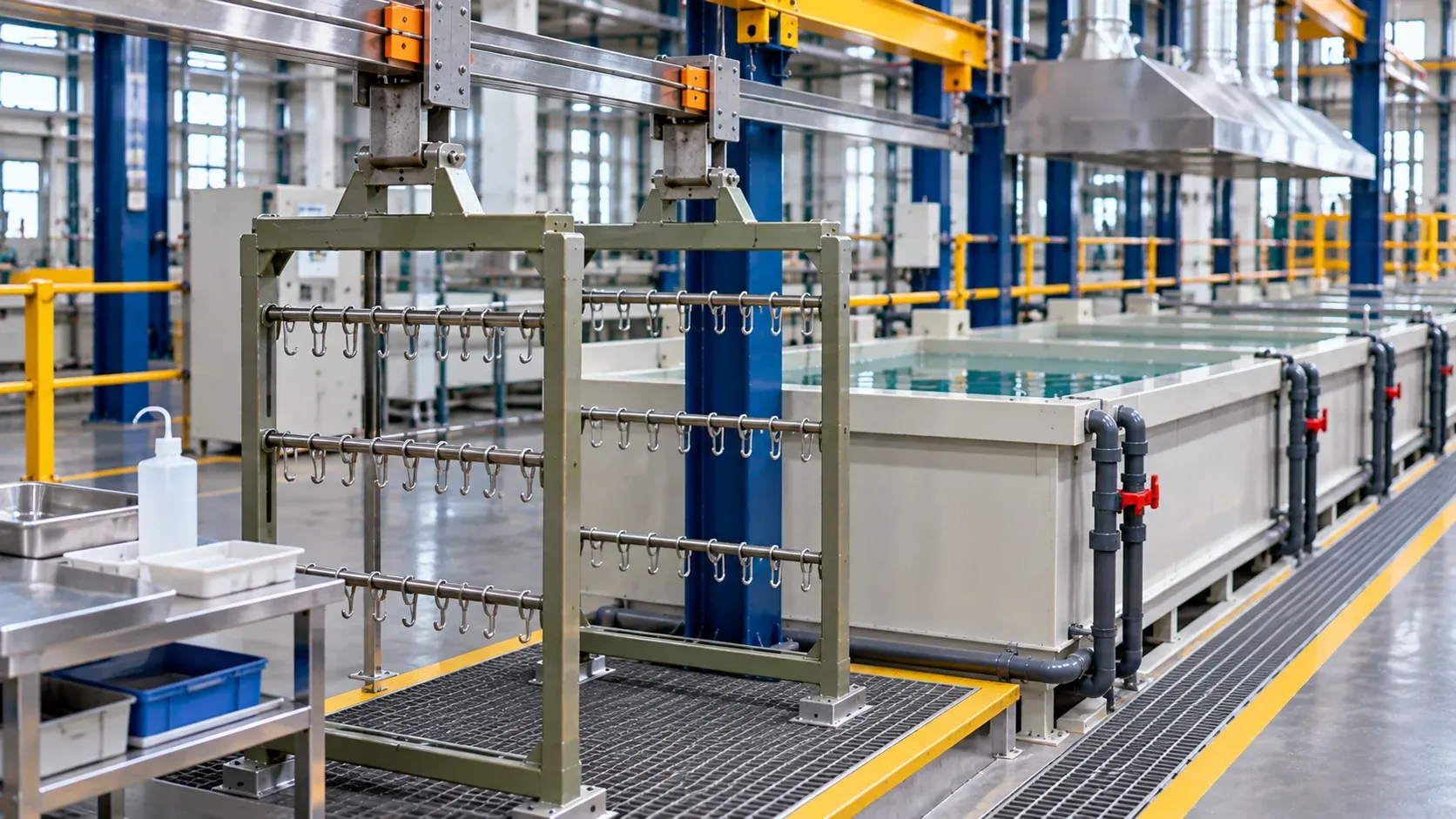
Plan a plating line changeover around the last rack of the outgoing family and the first rack of the incoming family. Confirm the route revision, fixture, station readiness and inspection plan. Give the first incoming load a documented release decision before opening normal production for that family.
ES-PRO editorial team · Updated 11 November 2026
This article addresses a scheduled switch between approved routes. Start with the plating line layout and the plant's route sheets. Check what actually changes at each station. A new screen recipe may leave the same rack or the same inspection setup in place, while the incoming part needs a different one.
Mark the last and first racks in the sequence
Give the outgoing rack an ID and record where it is allowed to finish. If outgoing and incoming racks can share the line, write down which stations they may share and which operating states must remain separate. Where the approved routes require segregation, include the clearing step in the changeover schedule.
Map the changeover from loading to inspection. Decide when incoming parts can be staged, when the new fixture and recipe can be selected, and who verifies the first load. Preserve the links between the part order, loaded rack, recipe revision and inspection result.
Changeover item | Confirm before the incoming rack | Evidence to keep |
|---|---|---|
Route and recipe | Correct revision, permitted station sequence and part family | Recipe ID and authorization or selection event |
Fixture and load | Approved rack revision, part orientation and occupied positions | Loaded rack ID and drawing or load map |
Shared stations | Cleared or released for the incoming route as required | Last outgoing rack and station status |
Inspection | Correct method, reference and locations for the new family | First-rack checklist and disposition |
Rejected or held work | Clear disposition and tracking for both families | Separate hold and release records |
Use the surface preparation sequence guide when the incoming family changes its preparation route and the same upstream stations serve both families.
Worked example with two approved nickel routes
Suppose both families use the same plating tank but different racks and different inspection points. Family A can clear the plating station while its last rack remains downstream. Family B may be staged at loading, but the approved sequence requires a different rack and transfer program. The incoming first rack also needs a measurement on a recessed surface that the outgoing inspection setup does not cover.
Build the changeover around those actual dependencies. Confirm the last Family A rack's location and which downstream stages can continue. Verify the Family B rack and recipe before its first move. Prepare the inspection fixture and record the first incoming load's result. If the recess check is unavailable, keep the first rack pending under the approved disposition. Identify where that hold can occur within the plant's process constraints.
The equipment quote should explain whether the scheduler supports both families in progress and how it prevents an incompatible route from being assigned. Ask for an acceptance demonstration with an incoming rack intentionally presented with the outgoing fixture ID or an outdated recipe revision. Use a controlled demonstration with an agreed expected response.
Agree what the operator sees and what the system records
Connect the control requirement to the automation and traceability guide. The system should make the selected recipe and rack identity easy to verify at loading and should preserve changes with their time and operator. If first-rack release is handled outside the controller, agree how the inspection record is linked and how the line learns that the hold has cleared.
Capture start and finish using the same boundaries for each changeover. A useful window is the last accepted outgoing rack to the first released incoming rack, provided the buyer defines how overlapping work is counted. Log activities that happen in parallel and the step that actually holds up release.
Include a repeat changeover with the normal production team. An engineering trial may use an extra inspector or a fixture staged in advance. Record which preparations can happen routinely and which depend on exceptional support before using the measured changeover time in a capacity quote.
Copy the changeover and release record
Record outgoing family and last rack · incoming family and first rack · old/new recipe revisions · fixture ID · shared station checks · inspection method and results · release owner · elapsed changeover time · open actions. Add the exact station or inspection point that controls the release.
FAQ
Do all tanks have to be empty for a recipe change?
Follow the approved route and segregation rules. Where coexistence is permitted, document exactly which stations may contain work from both families and how the controls track it.
Can one signed sheet cover multiple incoming racks?
Use the site's release and sampling rules. Identify which rack the first inspection represents and when normal release begins.
Should I include changeover in a capacity trial?
Include the representative switches and first-rack release time when they affect the buyer's shift demand.
Discuss recipe changeover requirements
Share the two routes and your release criteria. Include the rack changes, shared stations and inspection record. Send route sheets by sales email, or discuss the project on WhatsApp.
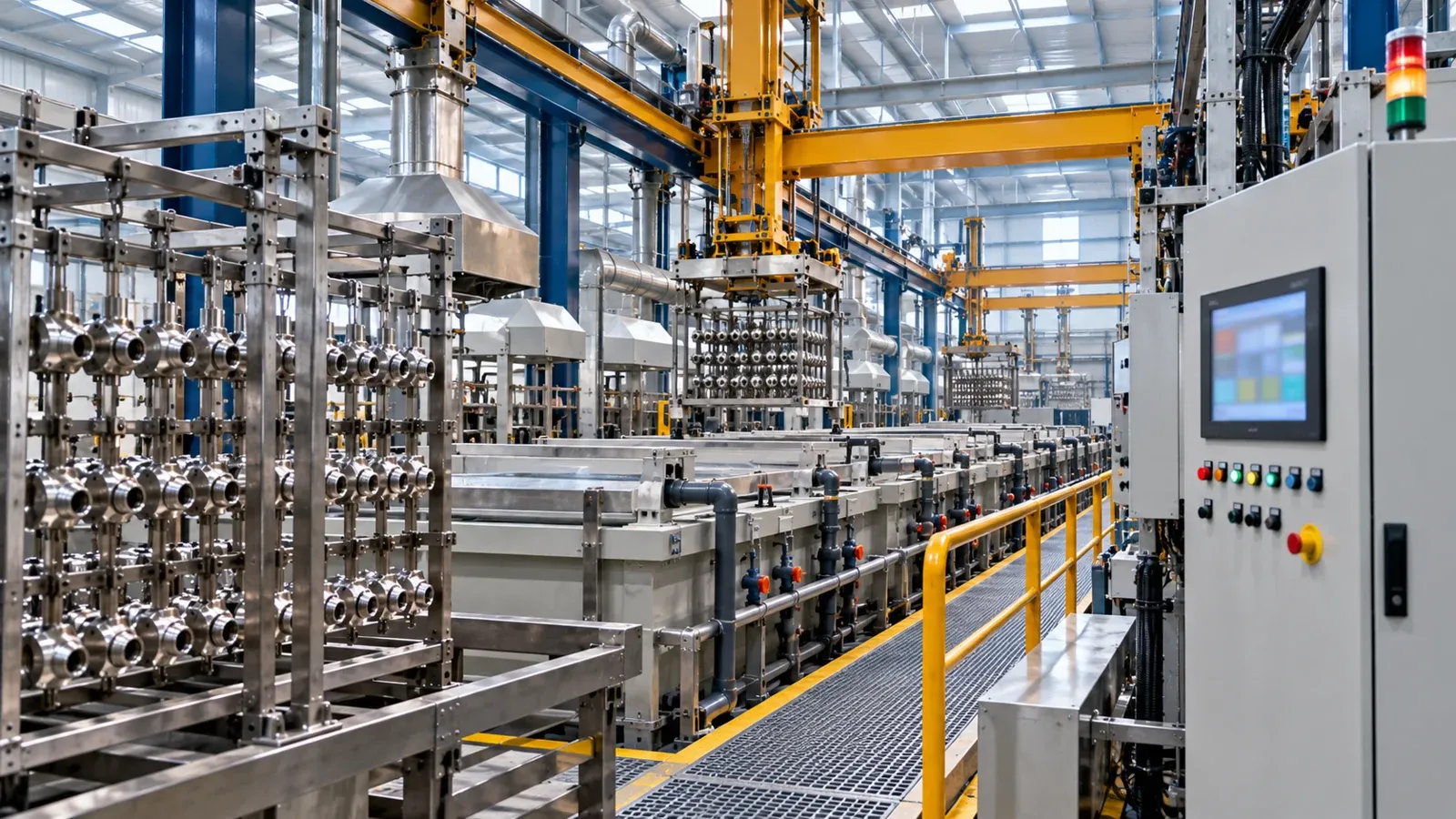
Image note: AI-generated editorial photography illustrates equipment or workpiece contexts; it is not an ES-PRO installation, customer reference or evidence of coating performance.