Measuring Plating Drag-Out in a Controlled Rack Trial
Plan a controlled plating drag-out measurement. Define the bath constituent, rinse volume and sampling window, then compare representative rack conditions.
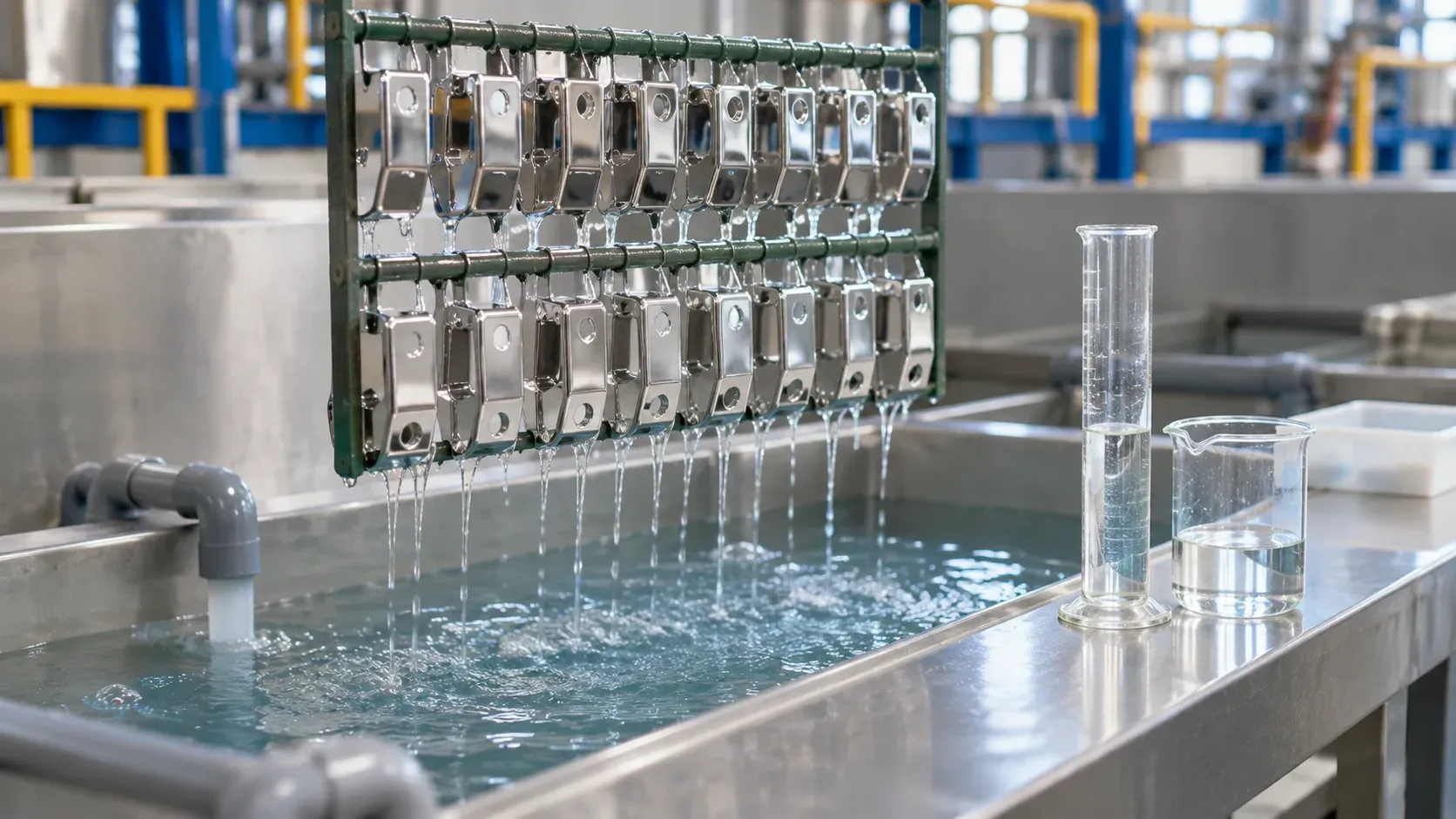
Measure plating drag-out with a defined rack, process constituent and collection boundary. Record the initial and final condition of the receiving rinse, its volume and the trial's flows. Use an approved mass balance to estimate the solution carried over, then repeat the comparison under representative loading and transfer conditions.
Drag-out is process solution carried from one stage into the next. Estimating it can help size rinsing or compare a drain sequence. The test plan needs a controlled boundary so the change in the rinse can be attributed to the rack being compared.
Define the collection and analysis boundary
Ask the process and analytical owners to select a suitable constituent and method. Identify the source-bath concentration and the receiving volume. Record the initial rinse concentration, how the sample becomes representative and whether any other load, feed, overflow or return crosses the boundary during the observation.
The EPA metal finishing guide discusses estimating drag-out from changes in a static rinse. Apply a mass balance appropriate to the actual setup. The simple comparison below assumes constant receiving volume, representative mixing, the same constituent and units, and no other constituent input or removal during the test.
Test input | What to establish |
|---|---|
Source process | Identified constituent and its measured concentration |
Receiving stage | Actual volume and initial concentration |
Trial rack | Part family, occupied positions, orientation and drain sequence |
Sampling window | Timing, mixing and the start/end observations |
Other flows | Any feed, overflow, recovery or second rack that changes the balance |
Worked example with a background correction
In a hypothetical comparison, the receiving rinse contains 1,000 litres and the measured constituent rises from 0.10 to 0.30 grams per litre. The source-bath concentration is 100 grams per litre. Under the stated constant-volume assumptions, the added mass is 200 grams and the approximate equivalent source-solution volume is 2 litres.
The calculation is receiving volume multiplied by the concentration increase, divided by the source concentration. Using the final concentration without correcting for the initial concentration would give 3 litres in this example. Record both readings and their units.
This simplified balance becomes inadequate if the receiving volume changes appreciably, a constituent reacts or is removed, or other streams enter. Have the responsible analyst account for those effects. If the volume or concentration change is small relative to measurement uncertainty, record that limitation before comparing two rack arrangements.
Compare one transfer change at a time
Run the approved baseline rack and a candidate arrangement with comparable parts, bath condition, occupancy and analysis. Change the intended factor, such as orientation, while retaining the other relevant conditions where possible. Record both drainage and the resulting part-quality checks.
A lower estimated carryover matters only within an acceptable process and production sequence. A longer drain step may consume hoist time or change the permitted transfer window. Ask the line supplier to show how the proposed change fits the schedule and whether the finished parts still meet the approved criteria.
Repeat a representative sequence rather than comparing a carefully handled single rack with a normal production run. If operators or part families vary, document which conditions the result covers. Keep the individual readings as well as the reported estimate.
Use the evidence in a rinse equipment brief
Give the supplier the measured basis, expected load rate and process boundaries. Explain whether the result represents normal work, a demanding part family or a proposed improvement. Use the plating line setup guide to connect the measurement with loading and transfer.
Review the pump and transfer guide for flow interfaces and the water treatment equipment category for the downstream duty discussion. Actual treatment and discharge decisions use the project-specific composition and requirements.
Record rack ID · loaded parts · source concentration · receiving volume · initial/final readings · analysis method · other flows · transfer sequence · calculated result · part acceptance and owner.
Keep the analyst's calculation with the raw data. Name the concentration units and receiving volume for each run. A spreadsheet that converts one result from milligrams per litre and leaves another in grams per litre can create a large apparent process difference. Check conversions and blank corrections before using the result to size a rinse or judge an improvement.
FAQ
Can conductivity replace a constituent analysis in this balance?
Use an approved analytical relationship for the particular system if one exists. A general conductivity trend alone does not supply a constituent concentration.
Can I apply one rack's result to all parts?
Define the part and transfer range the trial represents. Repeat the check for materially different geometry or loading.
Should the lowest drag-out arrangement always be chosen?
Compare carryover with part quality, handling and the permitted production sequence before approving the change.
Discuss rinse loads for your line
Share the measurement basis and representative rack. Include the method, other flows and the planned production rate. Send records by sales email, or discuss the project on WhatsApp.