Busbar plating equipment should be assessed using the rigid part geometry, required coating zones, permitted contact areas and accepted production target. Provide drawings for the largest and normal busbars, including bends and holes. The handling, electrical process and inspection boundary must be coordinated; the busbar's intended service rating alone does not size a plating line.
Where this does not fit
- Flexible conductors and continuous feed need a different handling brief.
- Finished busbar electrical-rating tests are separate from plating-equipment acceptance.
- Long or heavy parts need tank, lifting, access and factory-route checks.
What should a busbar plating drawing identify?
State the base material and its condition before processing. Show length, width, thickness, bends, holes and any assembled features. Mark the surfaces requiring coating and those to exclude. Identify electrical-contact faces used in service separately from the locations available for supporting or contacting the part during plating.
Provide the required coating designation and inspection locations. If several coatings or part families are involved, list them separately. A general request for “copper busbar plating” does not identify whether the coating is tin, silver, nickel or another specified system. The drawing and customer requirement determine the route to be assessed.
How does busbar line planning differ from selecting a coating?
Our tin plating for electronics and busbars guide discusses coating context. This brief addresses how the actual rigid parts move through a proposed line and how the production boundary is defined. Coating choice and handling choice need to be connected, but they are different decisions in the enquiry.
The ASTM B545 tin-coating specification and ASTM B700 engineering silver specification address different deposits. A coating specification or successful plated sample does not establish the electrical service rating of the completed busbar assembly.
Which busbar loading details change the plating proposal?
Provide the largest part and the normal mix, including dimensions and weight in the proposed loading arrangement. State the required orientation and identify features that limit access or retain solution. Include the fixture in the loaded envelope. Ask the assessor to review how the part travels through preparation, coating, rinsing and the final handoff.
Identify surfaces where contact or handling marks are restricted. Discuss how the part is supported during loading and unloading as well as during treatment. If the factory uses retained tooling, provide its drawing and condition. The proposal should state what has been assessed and which fixture details still need confirmation with representative parts.
Busbar loading and output worksheet
- Part family and loaded envelope
- Record for this projectLargest and normal parts, L/W/T, bends, holes, mass, required orientation and fixture envelope: ____
- How this changes the decisionChanges tank working dimensions, handling clearance, support and the route that must accommodate the complete load.
- Coated area
- Record for this projectDrawing revision, coated/excluded faces, area method, actual part mix and parts per rack: ____ Approved chemistry/route, current-density window, duration/duty, process owner and source revision (unknowns flagged for confirmation): ____
- How this changes the decisionDefines the workpiece-area input for plating current and capacity. Service current in the finished busbar is a separate input.
- Contacts and masking
- Record for this projectPermitted fixture-contact locations, service-joint faces, allowed marks, exclusion boundaries and masking tasks: ____
- How this changes the decisionChanges rack contacts, masking access, loading work and boundary inspection.
- Rack and transfer
- Record for this projectProposed support, spacing, loaded mass/envelope, retained tooling condition and transfer constraints: ____
- How this changes the decisionLets the supplier assess the loaded path and tooling scope before relying on a bare-part fit check.
- Accepted output
- Record for this projectAccepted pieces or area per month, part mix, loads, shift/calendar assumptions and observed recheck/reject basis: ____
- How this changes the decisionConnects the requested output to loading, processing, transfers, inspection and unloading rather than to one tank time.
- Rinse and final handoff
- Record for this projectRecesses/retained solution, drainage orientation, rinse requirement, drying and final handling condition: ____
- How this changes the decisionChanges orientation, rinse/transfer arrangements, drying and service-stream interfaces.
- Inspection and trial
- Record for this projectInvoked coating requirement, measurement faces, method/sampling, representative parts and acceptance owner: ____
- How this changes the decisionDefines instrument/fixture or external-test duties and the evidence required to accept the representative load.
- Supply and retained services
- Record for this projectRetained tanks, fixtures, electrical/water/extraction interfaces, included modifications, owners and open decisions: ____
- How this changes the decisionMakes offers comparable and exposes tasks that belong to the factory or another contractor.
Copy this project worksheet
Copy the blank fields into your RFQ or project notes and record each decision owner.
This is an original enquiry worksheet. It is not a rack design, lifting plan or electrical rating for either the plating equipment or the finished busbar.
Which busbar and plating electrical ratings must stay separate?
The operating current of the plating process and the busbar's intended use in an electrical assembly are separate requirements. Give the process owner the coated-area and loading information needed to define the approved plating duty. Give the equipment assessor that process requirement and ask for the stated output and monitoring boundary.
Do not infer the process power supply from the finished product's service description. Ask which area, contact arrangement and operating conditions support the proposed electrical duty. Request clarity about retained electrical equipment and connections. The equipment buyer's guide helps frame these duties within the complete line.
Worked example of plated area and rack current
Illustrative geometry calculation. Consider a rectangular bar measuring 200 mm by 50 mm by 5 mm, with no holes or bends. Assume all six faces are coated for this calculation. These dimensions illustrate the arithmetic and are not an ES-PRO equipment limit or a real production result.
| Calculation | Result | How to use it |
|---|---|---|
| Area per part = 2(LW + LT + WT) | 22,500 mm² = 0.0225 m² = 2.25 dm² | Replace this idealized area with the actual drawing's coated-area calculation. |
| 20 identical parts per rack | 0.45 m² = 45 dm² of workpiece area | Check whether the proposed loaded arrangement can carry and expose these parts. |
| Approved current density = j A/dm² | Idealized workpiece current = 45j A | Supply the approved process window; the assessment also needs rack current, distribution, controls and supply margin. |
Holes, bends, masking and contact exclusions change the real coated area. Fixture geometry and exposed conductive surfaces also need assessment. The bar's electrical service rating in use provides none of these plating-duty inputs. The example turns an area calculation into questions for the rack and rectifier proposal.
How should monthly busbar plating output be specified?
State the accepted output, the unit and the production schedule. Pieces per month may be useful for a stable part mix; area per month can provide another view when sizes vary. Include the part family or area definition behind either number. A target without its mix and shift assumptions leaves room for incompatible interpretations.
Ask the proposal to explain loading, processing, transfers, inspection and unloading under that schedule. Identify any manual tasks and changeovers assumed. If some operations use retained factory equipment, include their availability in the discussion. Compare accepted output through the agreed route rather than a nominal movement rate or the time in one tank.
What should a busbar plating inspection and trial establish?
Agree the representative busbars, orientation, loading and approved route before the trial. Mark the measurement positions on the drawing. State which coating and dimensional checks are required and the final condition at inspection. Keep any assembly-level electrical verification with the responsible specification and test owner.
ASTM B507-14(2021) provides part-design guidance relevant to rack-plated articles. It supports reviewing geometry and loading together; it does not validate the proposed fixture. Our coating thickness testing guide offers related context for selecting the agreed coating measurement plan.
What factory data is needed for a busbar plating upgrade?
Identify retained tanks, services, handling and fixtures. Provide the available floor plan, delivery route and shutdown constraints. Ask the supplier to distinguish modifications included in its quotation from work supplied by the factory or another contractor. Record which retained components need inspection before the proposal relies on them.
Include service-stream and water connections with the applicable project location. The responsible local specialists must assess the actual route and requirements. An equipment concept should show its boundary and unresolved inputs rather than claiming that a general drawing establishes a complete compliant installation.
Questions You May Have:
Does the finished busbar current rating size the plating rectifier?
No. The plating duty is developed from the approved process and actual load. Keep the product's service requirement and the equipment's process output clearly identified in the brief.
Should output be stated in pieces or square metres per month?
Use a unit that describes the production mix and define the basis. Provide both when useful, with the part family, accepted quantity and shift assumptions behind the figures.
Can the bare busbar dimensions define the handling envelope?
Include the complete loaded arrangement, fixtures and required orientation. The assessment must consider travel through the whole route, not only whether a bare part fits inside one tank.
Can an enquiry begin before the fixture is designed?
Yes. Provide the part drawing, coating zones, allowed contacts and production target. Ask which loading concept and representative-part assessment are needed before final fixture selection.
Get Proposal and Demo
Send your busbar line introduction with company, name, email and project country. Other fields are optional. Share the marked drawings, coating requirement, normal part mix and accepted output target when available. Request an assessment of handling, electrical interfaces and a relevant demonstration.
Send drawings and layouts by sales email, or chat on WhatsApp. Use our quotation scope guide to compare responsibilities and included equipment.
Official references
- ASTM B507-14(2021) provides guidance for the design of rack-plated articles.
- ASTM B545 covers electrodeposited tin coatings.
- ASTM B700 covers engineering silver coatings.
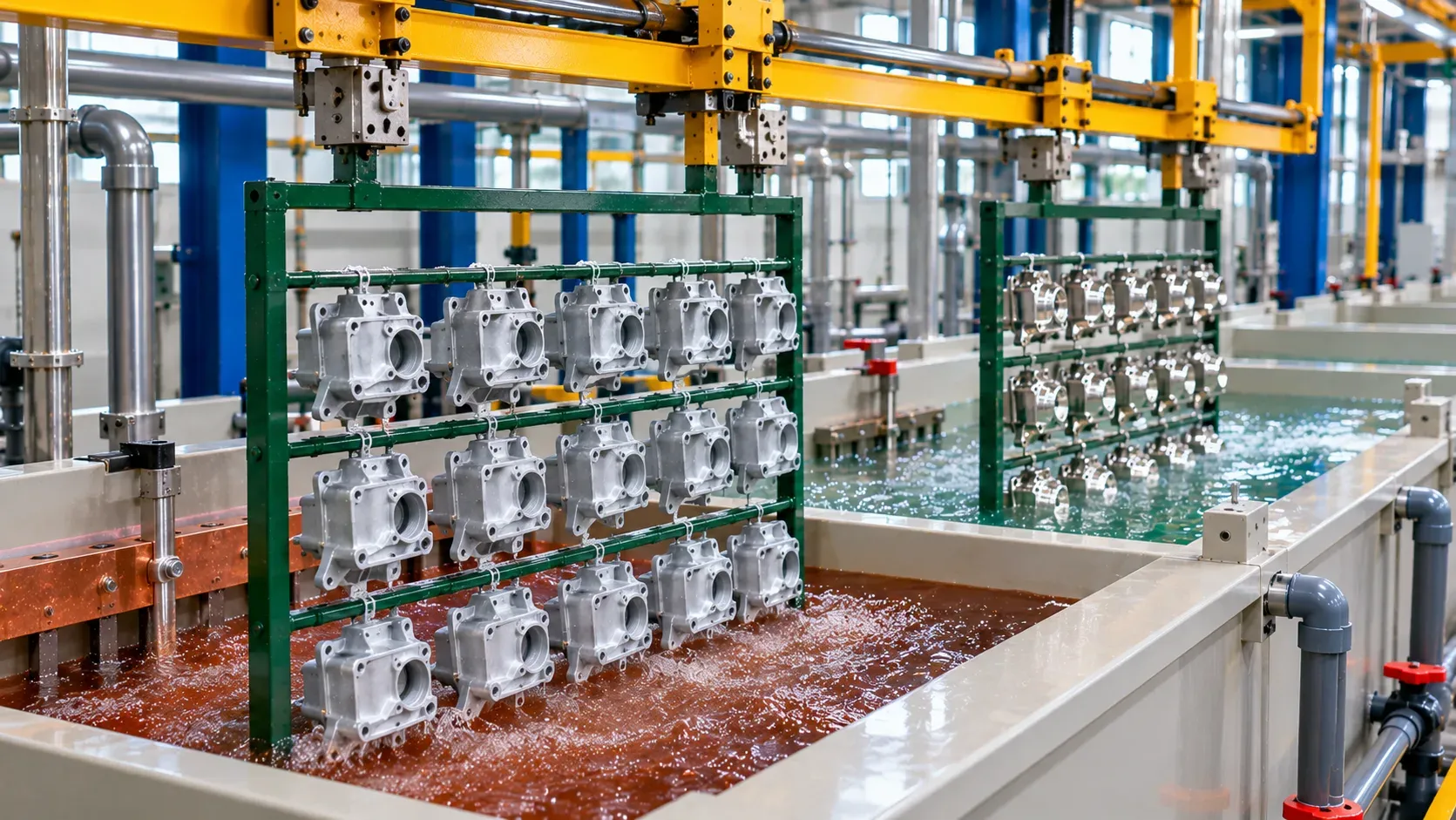
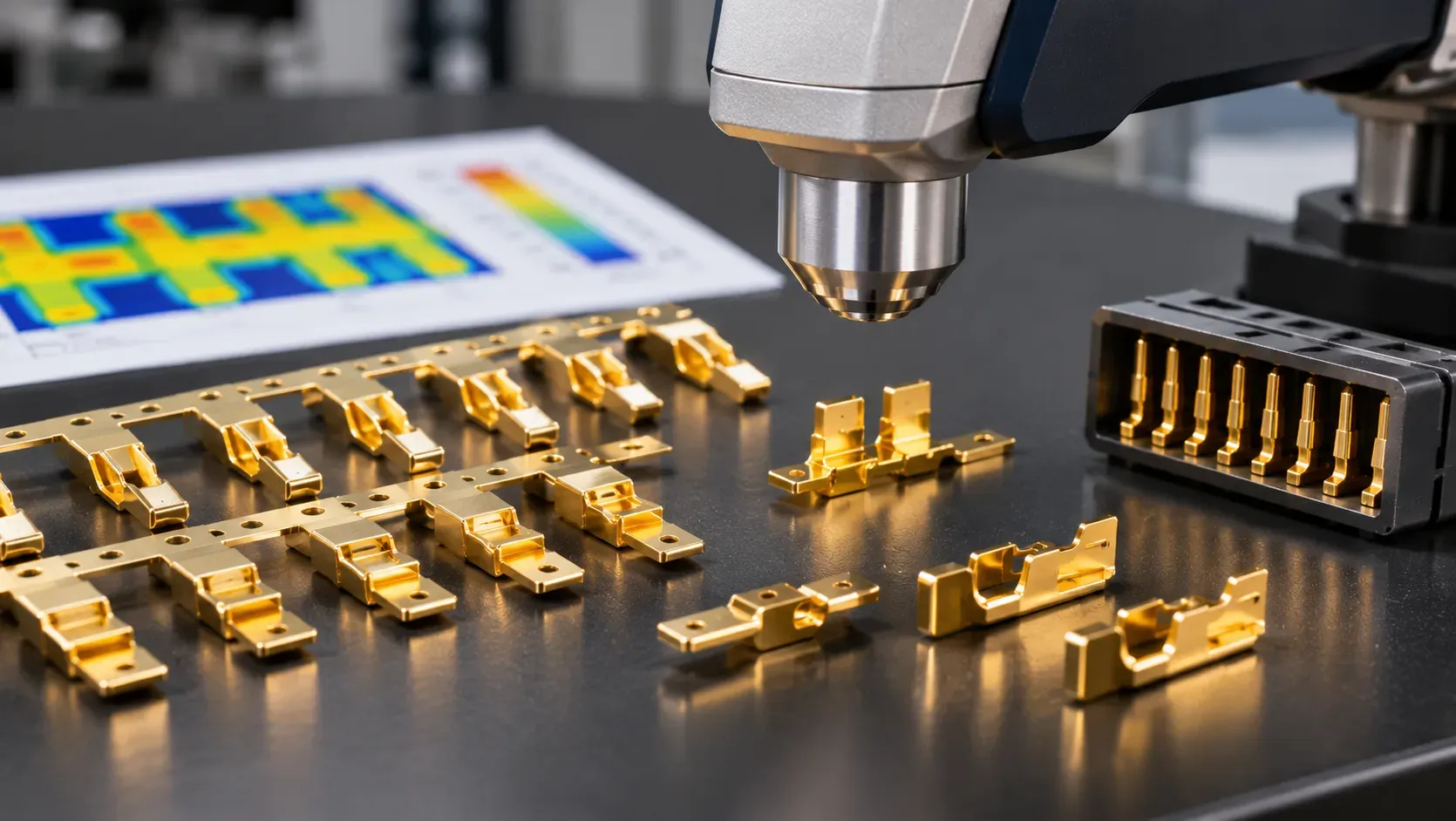
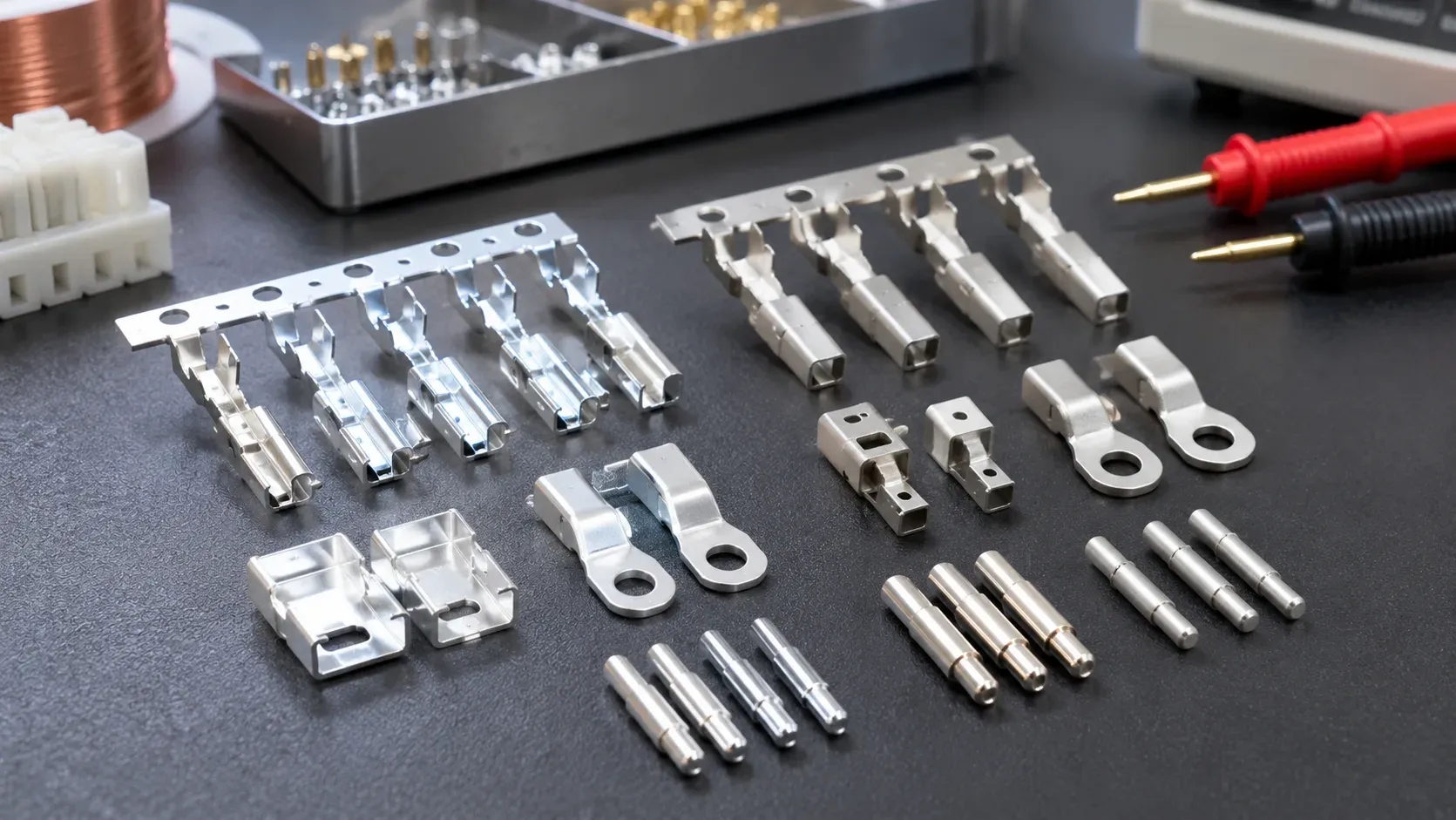
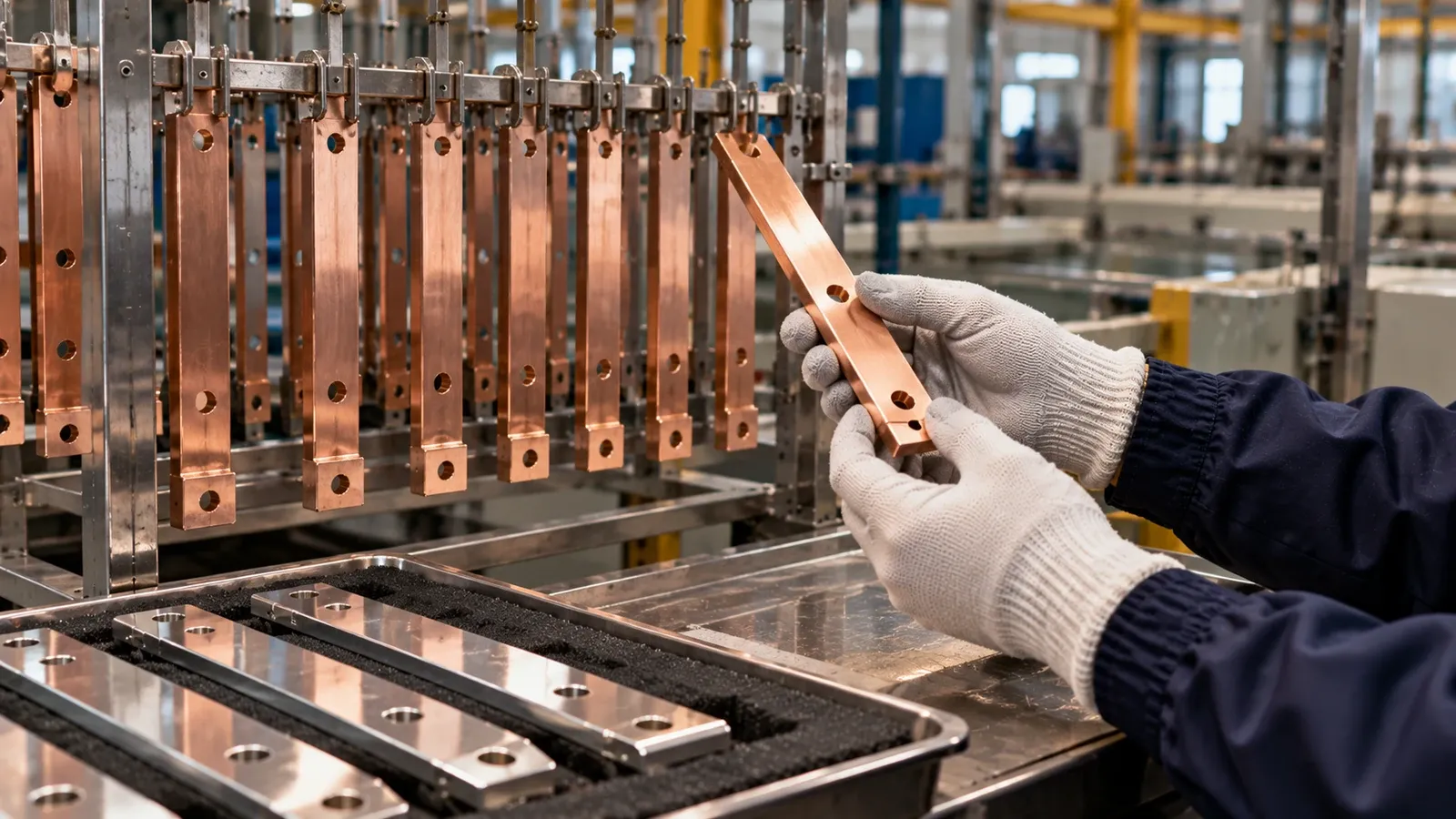
Image note: AI-generated busbar loading imagery is editorial illustration, not an ES-PRO installation, customer project or coating/electrical test result.