
Plating Process
Using a Water-Break Check Before Electroplating
Define where a water-break check belongs before electroplating. Record surface access, timing and the method limits alongside the part's release criteria.
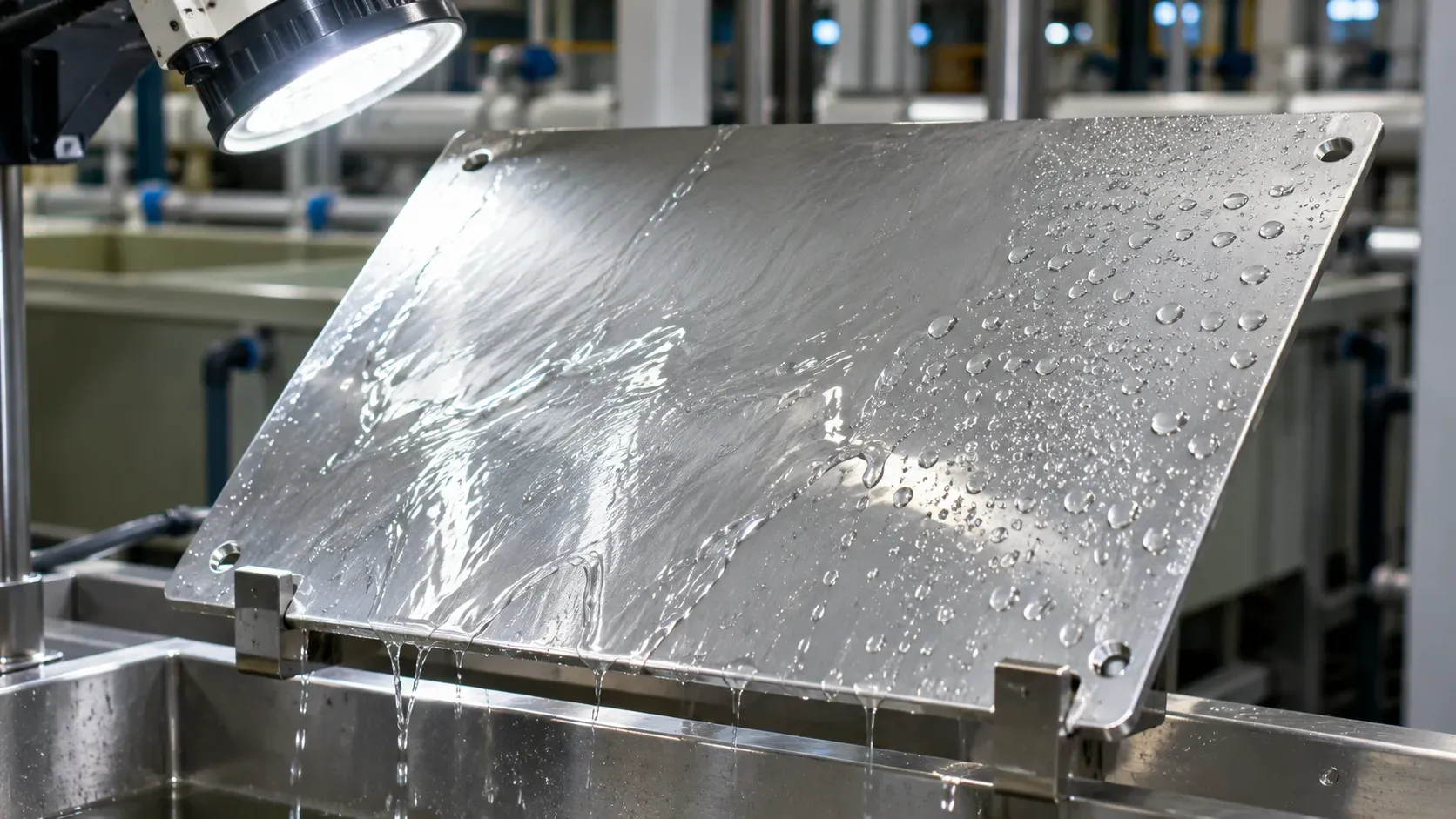
Use a water-break check where the approved method can observe the relevant surface and where the result answers a defined cleanliness question. Record the feature, process stage, timing and observation conditions. Connect the result to the accepted preparation route and retain any separate checks needed to release the finished part.
The ASTM F22 public scope concerns hydrophobic surface films. It also identifies limitations involving visibility, rough or porous surfaces and assemblies that can retain water. Review the applicable method and part geometry before putting the check into a line's inspection sequence.
Specify the surface the operator should see
Mark the observed area on the part drawing or an approved image. State where the observation occurs in the preparation route and what handling is permitted before it. Record the method revision and the conditions needed for a repeatable observation.
An accessible external face and a hidden internal pocket are different inspection tasks. If the required surface cannot be seen, ask the process and quality owners for an appropriate alternative or representative evidence. A result on the accessible face should remain linked to that defined surface.
Planning question | Record | Why it matters |
|---|---|---|
What surface is assessed? | Marked feature and line of sight | Makes the observation repeatable |
At what stage? | Approved route and observation point | Keeps the result connected to the relevant preparation |
What can affect the observation? | Surface condition, handling and timing | Helps explain inconsistent results |
What result releases the part? | Approved criterion and required additional evidence | Defines the decision supported by the check |
Use the surface preparation guide to place the observation within the complete sequence. Where cleaning equipment is under review, the ultrasonic cleaning explanation helps frame a separate equipment discussion.
Work through a pocketed metal component
Suppose a component has a broad face and a deep pocket. The approved observation shows a continuous water film on the broad face. The pocket's relevant surface is out of view. Record the broad-face result and the access limitation separately.
The quality owner decides how to assess the pocket's preparation. A representative trial may connect the approved cleaning sequence with an agreed surface or coating test on that feature. The trial should preserve the incoming material and contamination condition it is intended to represent.
If different operators disagree on the broad-face observation, compare the same feature at the same stage using the same reference conditions. Check whether one observation followed different handling or elapsed time. Establish the decision rule and the reference before using the check as a routine release.
Keep cleaning evidence and coating evidence connected
A preparation check gives evidence about its assigned surface condition. The final coating still has the drawing's appearance, dimensional, adhesion or other requirements. Record the result with the later load and finished inspection so a future defect can be investigated across stages.
The coating thickness testing guide illustrates why the method and location of a final measurement need their own plan. Apply the same discipline to naming the surface and the point in the route for the cleanliness observation.
If a new incoming residue is introduced, review whether the existing check still addresses the changed condition. Ask the process owner which approved comparison can demonstrate suitability. Preserve the actual observations and the basis for accepting the revised incoming condition.
Put the observation point into the equipment layout
If routine inspection is required, specify the access, lighting, handling and record capture needed at that stage. Confirm that the approved inspection can occur without violating the route's transfer conditions. State who owns the part-quality decision and how a hold is identified.
Record part and lot · surface observed · method revision · stage and time · handling condition · observation · visibility limit · additional evidence · disposition and owner. Ask another trained operator to use the record on a representative part before adopting it across shifts.
Build the training set from the actual parts and approved reference conditions. Include a case where the observation is inconclusive because of visibility or surface condition. The operator should be able to record that limitation and route it to the responsible owner. This is more useful than forcing every observation into a pass or fail without a supported decision.
FAQ
Does a water-break result prove every contaminant is absent?
Use the check for the hydrophobic-film question and surfaces it covers. Specify other evidence when the process or drawing requires it.
Can I assess a hidden pocket by looking at the outside?
Record the visible result for the assessed area. Agree the evidence needed for the pocket with the quality and process owners.
Should the check be inserted anywhere before plating?
Place it at an approved point and confirm the handling and transfer conditions for the complete route.
Discuss preparation inspection access
Share the surface and inspection question. Include the incoming condition, geometry and route stage. Send marked images by sales email, or discuss the project on WhatsApp.


