Plating Lines & Equipment
Hard Anodizing Tanks: Cooling, Loading and Project Inputs
Plan hard anodizing tanks using alloy, coating requirements, loading, electrical duty, cooling interfaces and representative-part acceptance evidence.
@media (max-width:600px) { .espro-guide { font-size: 17px; } .espro-guide .comparison-scroll { overflow: visible; } .espro-guide table, .espro-guide tbody, .espro-guide tr, .espro-guide td { display: block; width: auto; } .espro-guide thead { display: none; } .espro-guide tr { border-bottom: 2px solid #d7e3f4; } .espro-guide td { padding: 12px 15px; } .espro-guide td:before { content: attr(data-label); display: block; color: #2454a6; font-size: 12px; font-weight: 700; margin-bottom: 5px; } .espro-guide .brief-flow { display: block; } .espro-guide .brief-flow span { display: block; margin-bottom: 10px; } }
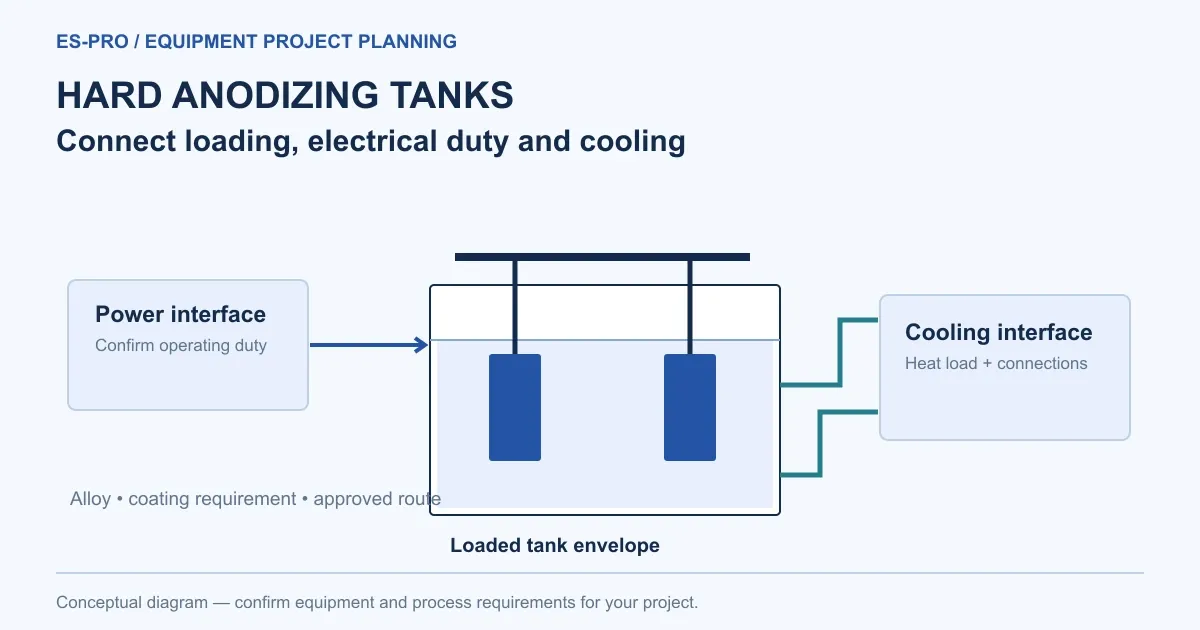
Hard anodizing tanks should be planned around the approved coating route, part loading, electrical duty and temperature-control requirement. Give the equipment assessor the alloy, significant surfaces, coating specification and production schedule. The tank, cooling circuit, handling and factory utilities then need a coordinated brief, rather than selection from tank volume alone.
Part & oxideTank & coolingVerify the loaded route
Original editorial enquiry framework. Conceptual inputs, not an engineered layout or measured result.
Which hard-anodizing coating requirements should precede tank selection?
Begin with the drawing and the specification accepted by the process owner. State the alloy, incoming surface condition, significant areas and required final treatment. Include any restrictions on dimensional change, contact marks or subsequent assembly. Anodizing forms an oxide coating; it should not be described in the enquiry as deposition of a separate metal coating.
The public scope of ASTM B580-25 addresses porous anodic oxide coatings on aluminum and its alloys. The coating requirement establishes the acceptance discussion. It does not provide a universal tank size or cooling-system rating for every hard anodizing project. For the treatment distinction, see our plating, anodizing and electropolishing comparison.
What part schedule should accompany a hard-anodizing tank enquiry?
List the normal and largest parts, including their dimensions and loaded weights. Mark electrical contact locations and surfaces where marks are restricted. Show the proposed loading orientation if one already exists. Give the assessor the number and mix of parts expected in a load, and identify cavities or features that need particular attention during immersion, rinsing and drainage.
Ask the supplier to explain its proposed working envelope and the assumptions supporting it. Distinguish the space occupied by the parts from the complete installation footprint. Handling travel, access, connections and maintenance space also need consideration. A photograph of a large tank does not establish that a particular loaded assembly can be processed through the whole route.
How should hard-anodizing cooling duty be specified?
Provide the process owner's approved temperature requirement and the operating sequence used to establish the duty. Include planned electrical operation, simultaneous loads, shift pattern and recovery expectations. Record the factory's available cooling service, its known variations and the location of retained equipment. Where these inputs are incomplete, list them as unresolved assumptions.
Request a proposal that explains the thermal boundary. Identify whether the offer includes cooling equipment, heat exchange, distribution, monitoring and the relevant controls. Ask which conditions are used to quote performance. Avoid comparing one supplier's complete circuit with another supplier's tank and a factory-supplied utility that has not yet been assessed.
Interface | Information to provide | Offer clarification |
|---|---|---|
Parts and loading | Alloy, geometry, orientation and loaded weight | Working envelope and handling assumptions |
Process route | Approved stages and coating requirement | Included preparation and finishing stages |
Electrical duty | Process-owner requirement and load schedule | Output/control boundary and connections |
Temperature control | Approved conditions and recovery needs | Thermal assumptions and monitoring points |
Factory service | Available cooling, water and power information | Retained and newly supplied equipment |
Maintenance | Access restrictions and service ownership | Isolation, inspection and cleaning access |
This is an editorial interface schedule. It is not a thermal calculation, construction drawing or confirmation of a standard ES-PRO offering.
How do handling and access affect a hard-anodizing line?
Review the path of the loaded assembly through every proposed stage. Ask how the part is transferred, how its position is maintained and where operators need access. Include loading and unloading tasks in the production discussion. A short coating-stage estimate does not establish the output of the complete route when preparation, rinsing or loading becomes the limiting operation.
Identify maintenance tasks that need access around the tank and the cooling circuit. Ask how the proposed installation allows inspection and servicing of retained equipment. Provide obstructions, delivery limits and permitted shutdown periods for an upgrade. The plating line planning checklist helps organise these factory inputs even where the final treatment is anodizing.
Which hard-anodizing exhaust and effluent interfaces need assessment?
Give the project country, location and the approved treatment route. Identify exhaust collection, water connections and the destination of rinse or service streams. Ask responsible local specialists to confirm the applicable requirements. A change in treatment route can affect the information they need, so the enquiry should identify the actual chemistry rather than assuming every surface-treatment tank has the same duties.
The EPA metal-finishing guidance provides U.S. category context. It does not approve a discharge arrangement for the factory. Specify who owns the assessment, who provides the connections and which responsibilities are outside the equipment quotation.
What should hard-anodizing equipment acceptance include?
Agree a representative part, loading pattern and approved operating sequence. Request records from the agreed temperature and electrical monitoring locations during that sequence. State the coating and dimensional checks required afterwards, and identify the responsible inspector. Distinguish confirmation of equipment operation from approval of the finished coating.
For an upgrade, record which instruments and circuits remain, who checks their condition and how the line transitions into production. A demonstration should use the stated factory service assumptions. If a temporary utility is used, document the difference and how the permanent installation will be accepted.
Questions You May Have:
Can tank capacity determine the cooling requirement?
It is only one input. Provide the approved process conditions, loading and operating schedule so the proposal can explain the complete thermal duty and its assumptions.
Should I specify a generic hard anodizing temperature?
Use the approved process-owner requirement for the actual alloy and coating. An equipment enquiry should not substitute an unrelated operating window for that requirement.
Can existing cooling equipment be retained?
It may be considered after its condition, available service and interfaces are assessed. Clearly mark retained equipment and ask how the proposed operating sequence will be demonstrated.
Is anodizing a type of metal electroplating?
The treatment forms an oxide coating on the substrate. Describe the actual route in the enquiry so the assessor can distinguish it from metal-deposition equipment.
Get Proposal and Demo
Send an anodizing project introduction with company, name, email and project country. Technical information is optional. Provide the alloy, largest loading arrangement, approved coating requirement and retained cooling information when available. Ask which equipment assessment and demonstration apply to that scope.
Send layouts and specifications by sales email, or chat on WhatsApp. Use our quotation scope guide to record included equipment and factory responsibilities.
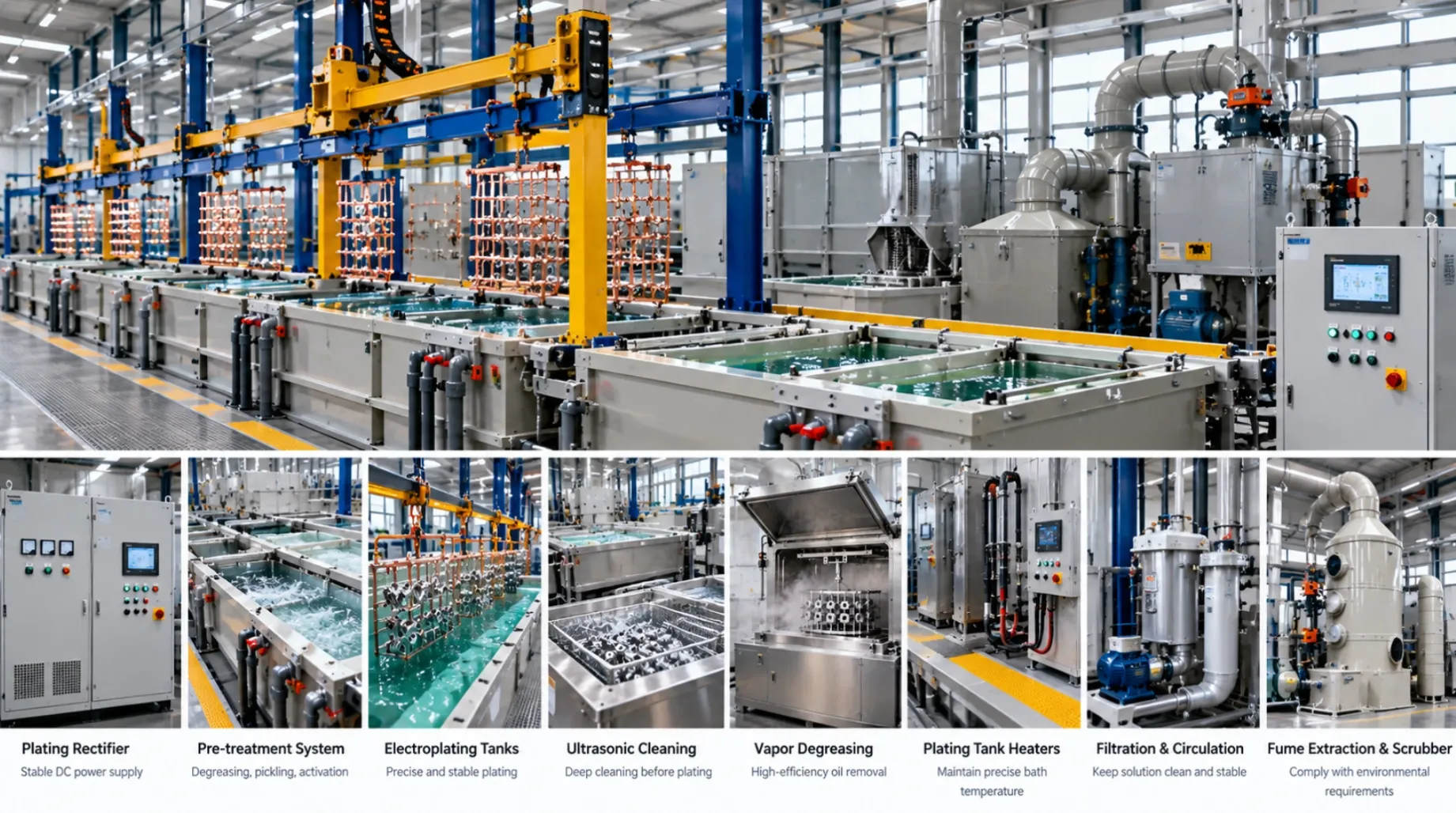
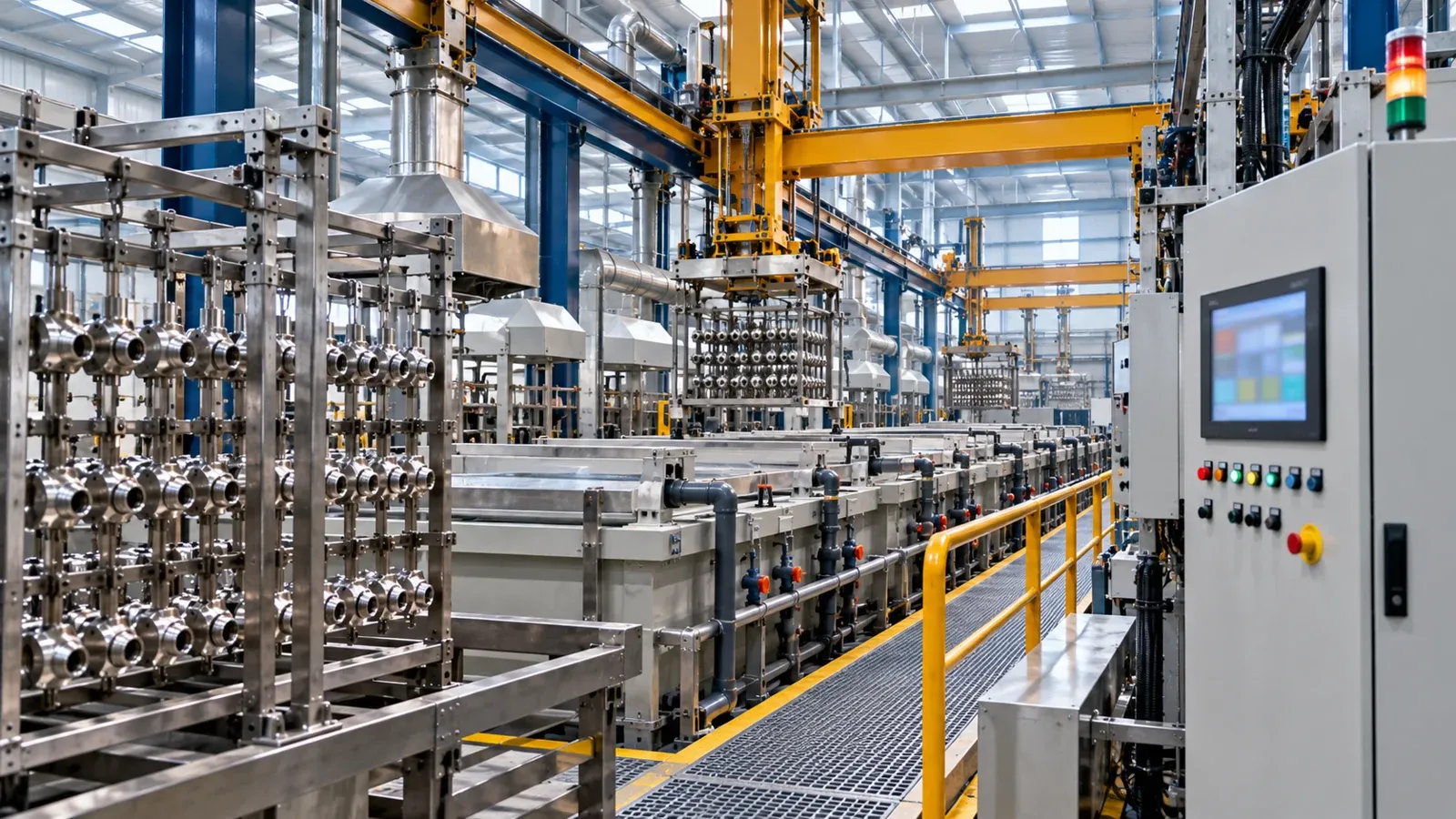
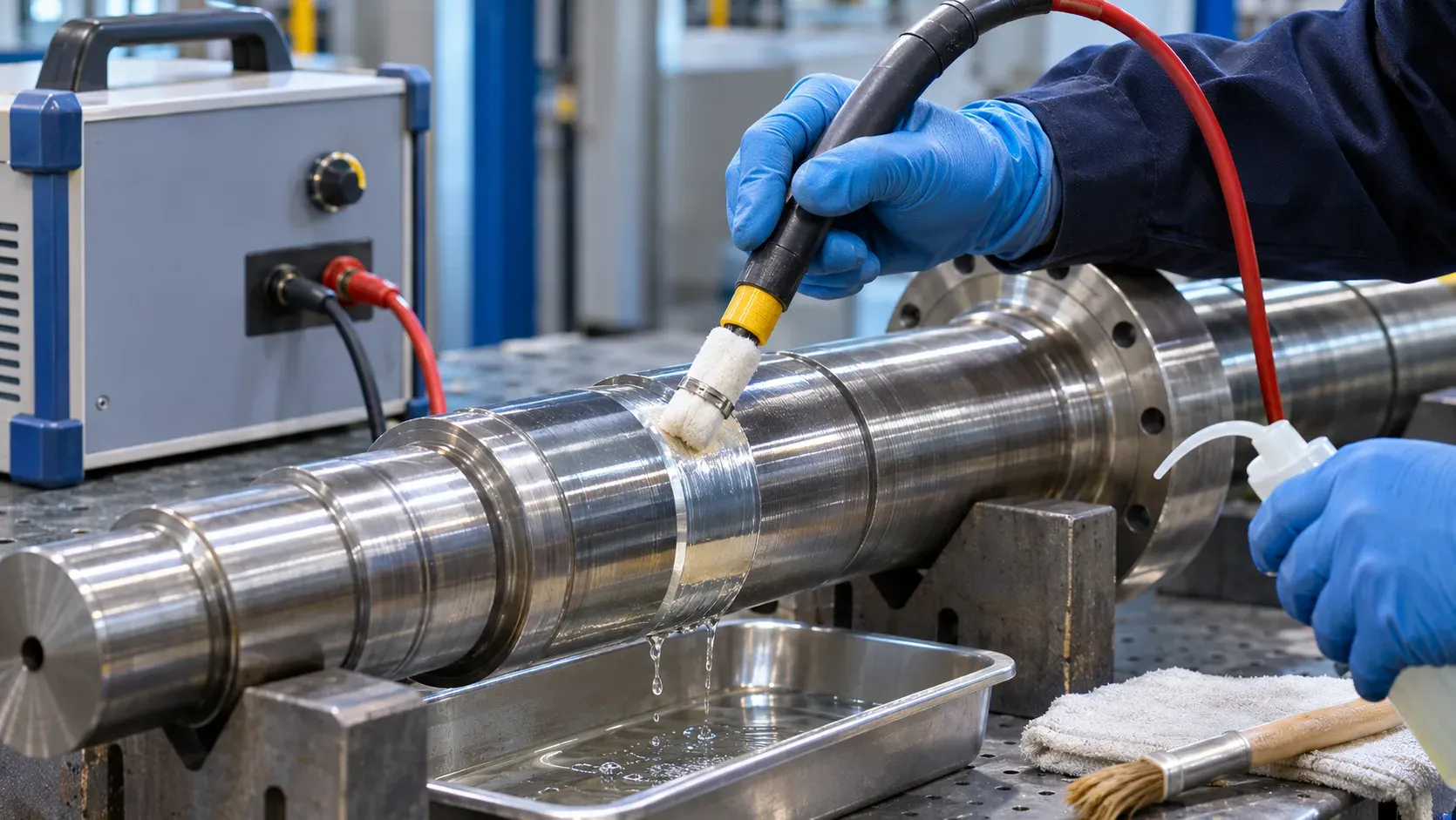
Image note: AI-generated cover illustration; not an ES-PRO installation, customer project or test result.