Plating Lines & Equipment
Electroplating Equipment Cost Drivers Analysis
Two buyers can request quotes for the "same" plating line and receive offers that differ by 300%. The difference is not supplier greed — it is the specification. This guide identifies the cost drivers
Two buyers can request quotes for the "same" plating line and receive offers that differ by 300%. The difference is not supplier greed — it is the specification. This guide identifies the cost drivers in a plating line quotation so you can compare offers on equal terms and understand which specification decisions move the price.
Technical planning document — the cost ranges are indicative and vary by region, supplier and specification detail.
The five cost drivers
Driver | Cost impact | What moves it |
|---|---|---|
Automation level | +30–200% on the line price | Manual hoists → semi-automatic → fully programmable with recipe control |
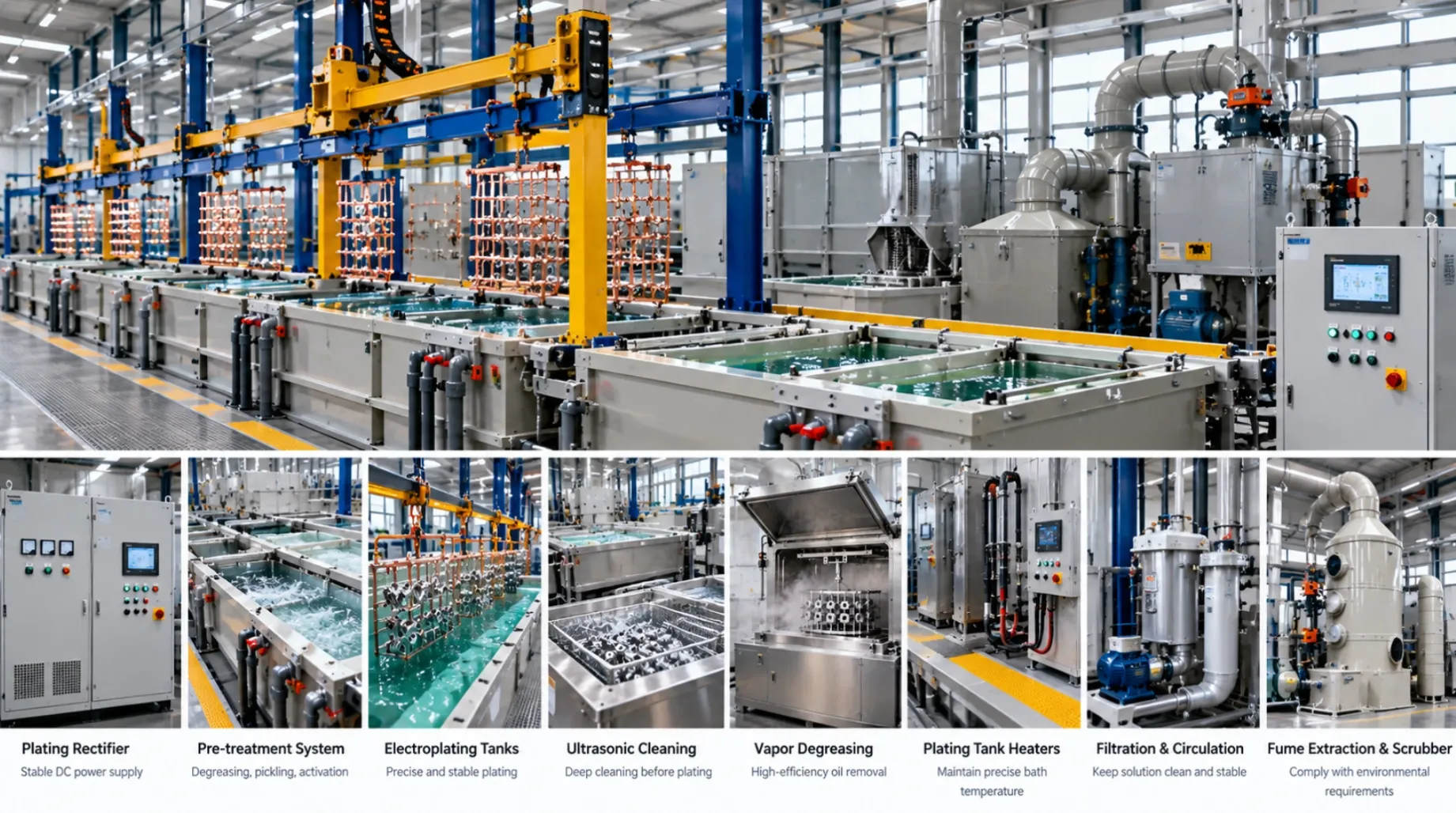
Treatment plant stages | +€20,000–150,000 | Number of stages: simple precipitation → +cyanide oxidation → +chrome reduction → +polishing → +closed loop |
Tank count and size | +€5,000–50,000 per tank | Number of process steps, tank volume (part size), tank material |
Monitoring and documentation | +€10,000–80,000 | Analog gauges → digital instruments → automated logging → traceability system → OEM audit readiness |
Material quality | +10–50% on the line price | Standard PP vs imported CPVC; standard rectifier vs switching-mode with low ripple |
Where the money goes — and where it saves
Investment | Cost | Savings |
|---|---|---|
Counterflow rinsing | +€3,000–8,000 | Cuts water consumption by 70–90% — pays back in months where water costs are high |
Conductivity-controlled rinse | +€2,000–5,000 | Automates the rinse stage; reduces operator error |
Treatment plant monitoring | +€5,000–20,000 | Passes inspections faster; reduces discharge surcharges |
Fume extraction with scrubber | +€8,000–30,000 | Mandatory for chrome and acid lines; avoids worker health claims |
Automated hoist with recipe control | +€30,000–100,000 | Reduces operator cost; enables OEM audit compliance |
Closed-loop water system | +€30,000–200,000 | Eliminates discharge; pays back where water costs are high or permits are difficult |
The hidden costs of under-specifying
Buyers who cut specification to reduce the line price create operating costs that exceed the savings:
- No fume extraction on acid lines. Corroded building structure, worker health claims, inspection failures.
- No treatment plant monitoring. Discharge surcharges, agency fines, emergency treatment after excursions.
- Manual operation on a production line. Operator cost that exceeds the automation payback within 2–3 years.
- Standard rectifier with high ripple. Deposit roughness that fails customer requirements, rework cost.
- No equalization tank. Clarifier overwhelmed at peak loads; treatment plant underperforms.
Comparing quotes on equal terms
When comparing supplier quotations, check that every offer includes the same scope:
- Tank material (PP vs CPVC vs lined steel) and thickness
- Rectifier type (switching mode vs thyristor) and ripple specification
- Hoist automation level and number of programme steps
- Treatment plant stages, monitoring instruments and automation
- Fume extraction included or excluded
- Installation, commissioning and training included or excluded
- Warranty terms and spare parts availability
Key takeaways
- Automation level is the biggest cost driver — it adds 30–200% to the line price but pays back in operator cost and quality consistency.
- Counterflow rinsing and conductivity control are the highest-ROI upgrades — they pay for themselves in water savings.
- Treatment plant stages follow the chemistry route, not the budget — cutting stages creates compliance costs.
- The hidden costs of under-specification exceed the savings within 2–3 years of operation.
- Compare quotes on scope, not price — a cheaper offer with less scope is more expensive to operate.
Your next five steps
- Write the equipment scope before requesting quotations — the scope defines the price.
- Send the same scope to at least three suppliers for comparable offers.
- Calculate the operating cost of each offer, not just the purchase price.
- Check treatment plant stages against your chemistry route and permit requirements.
- Negotiate scope gaps rather than accepting the lowest offer blindly.
FAQ
What is a typical plating line cost?
A small manual rack line costs €30,000–80,000; a mid-sized automated barrel line costs €80,000–200,000; a full automated rack line with treatment plant costs €150,000–500,000. These ranges vary by region, specification detail and supplier.
Is automation always worth the investment?
For production volumes above a few hundred parts per day, yes — operator cost alone pays back the automation. For small-volume custom work, manual or semi-automatic operation may be more economic.
How do we justify a treatment plant to management?
Calculate the alternative: discharge fees, agency fines, customer audit failures and operator health costs. The treatment plant is cheaper than any of these over 5 years.
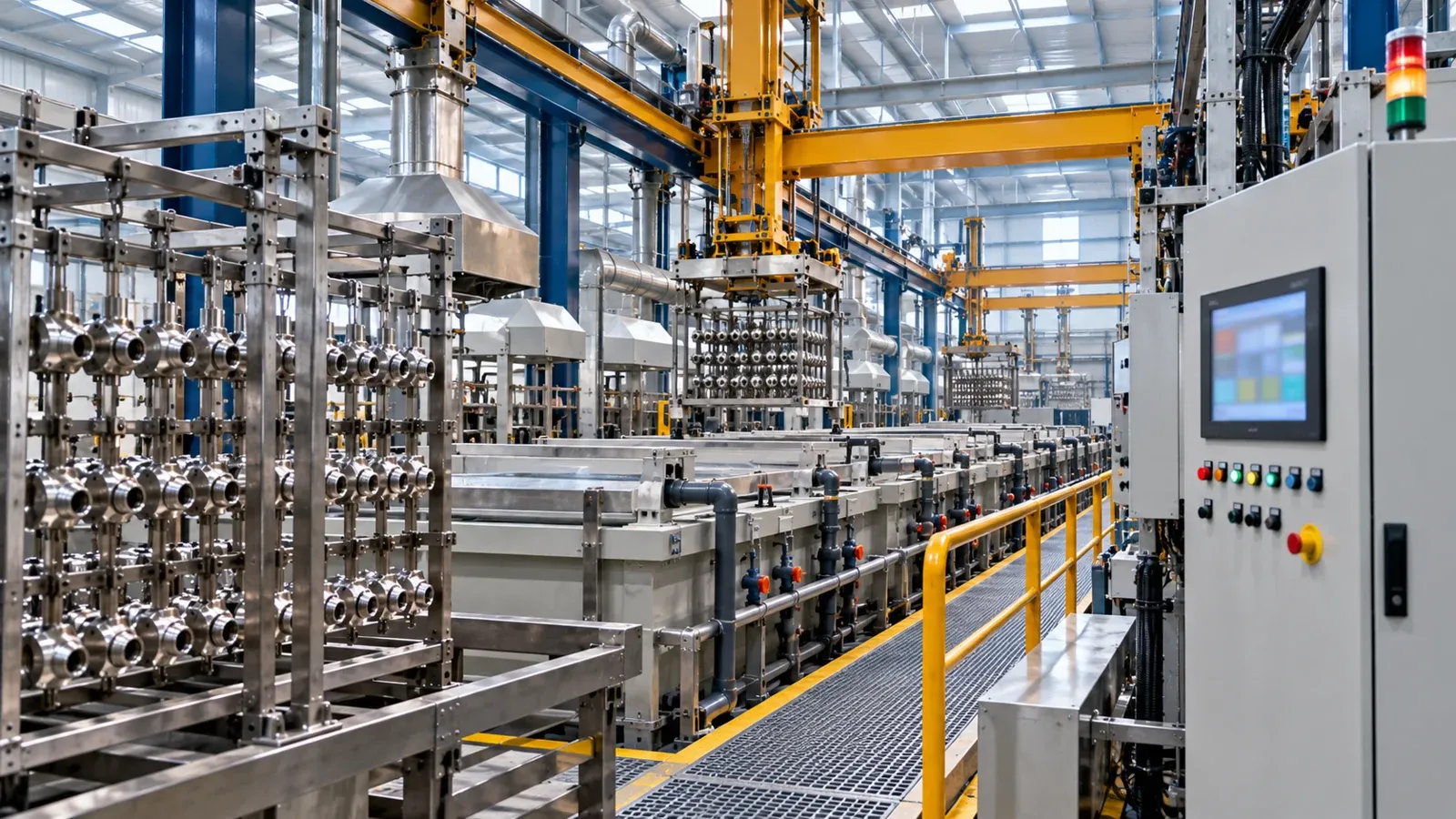
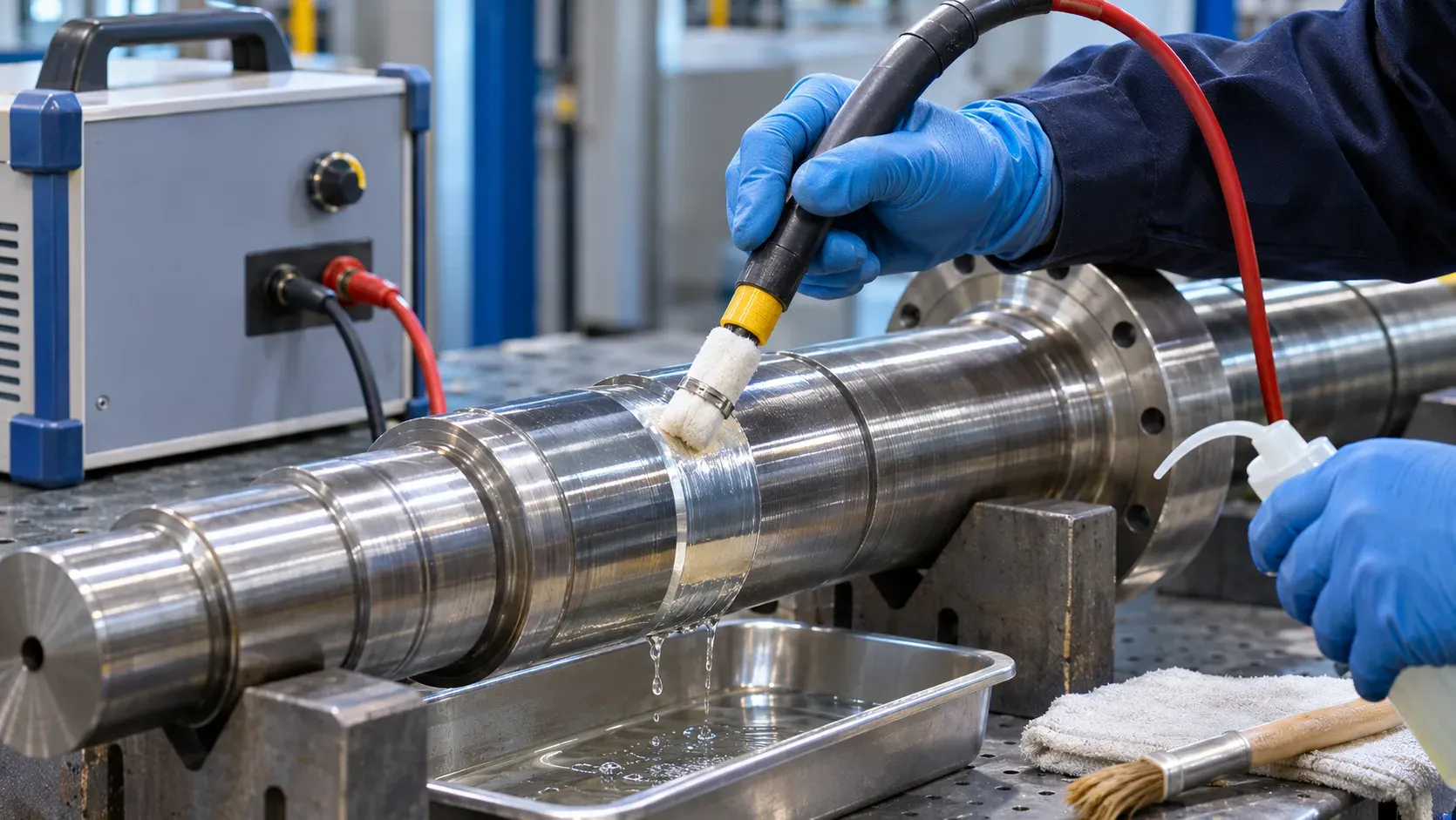
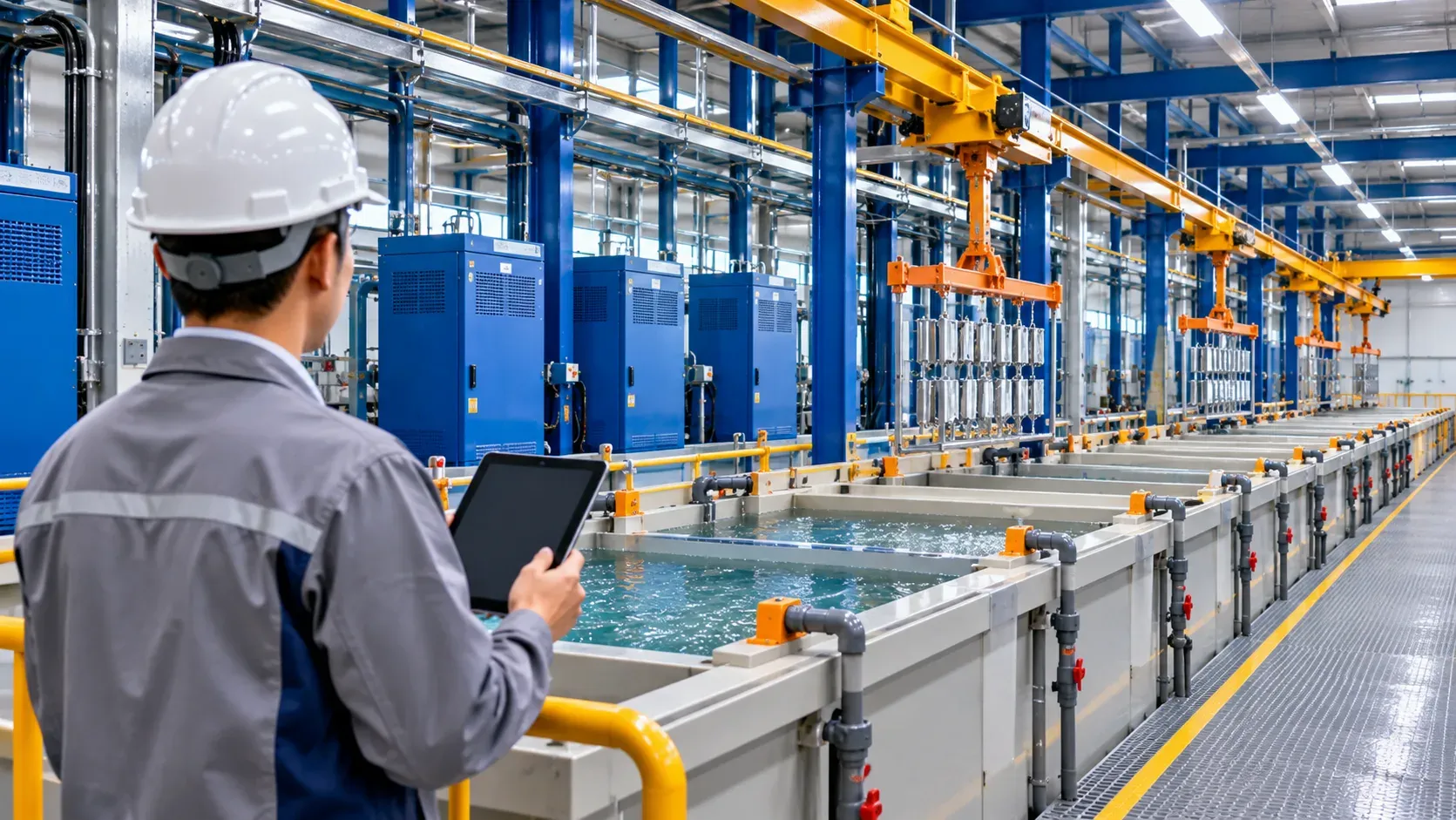
Image note: AI-generated editorial photography illustrates equipment or workpiece contexts; it is not an ES-PRO installation, customer reference or evidence of coating performance.