Plating Lines & Equipment
Anodizing vs Powder Coating: The Decision Inputs
Anodizing vs powder coating: what each route does to the aluminum surface, where each wins, and the tolerance, appearance, durability and volume inputs that decide.
# Anodizing vs Powder Coating: The Decision Inputs
ES-PRO editorial team �� Updated 27 October 2026
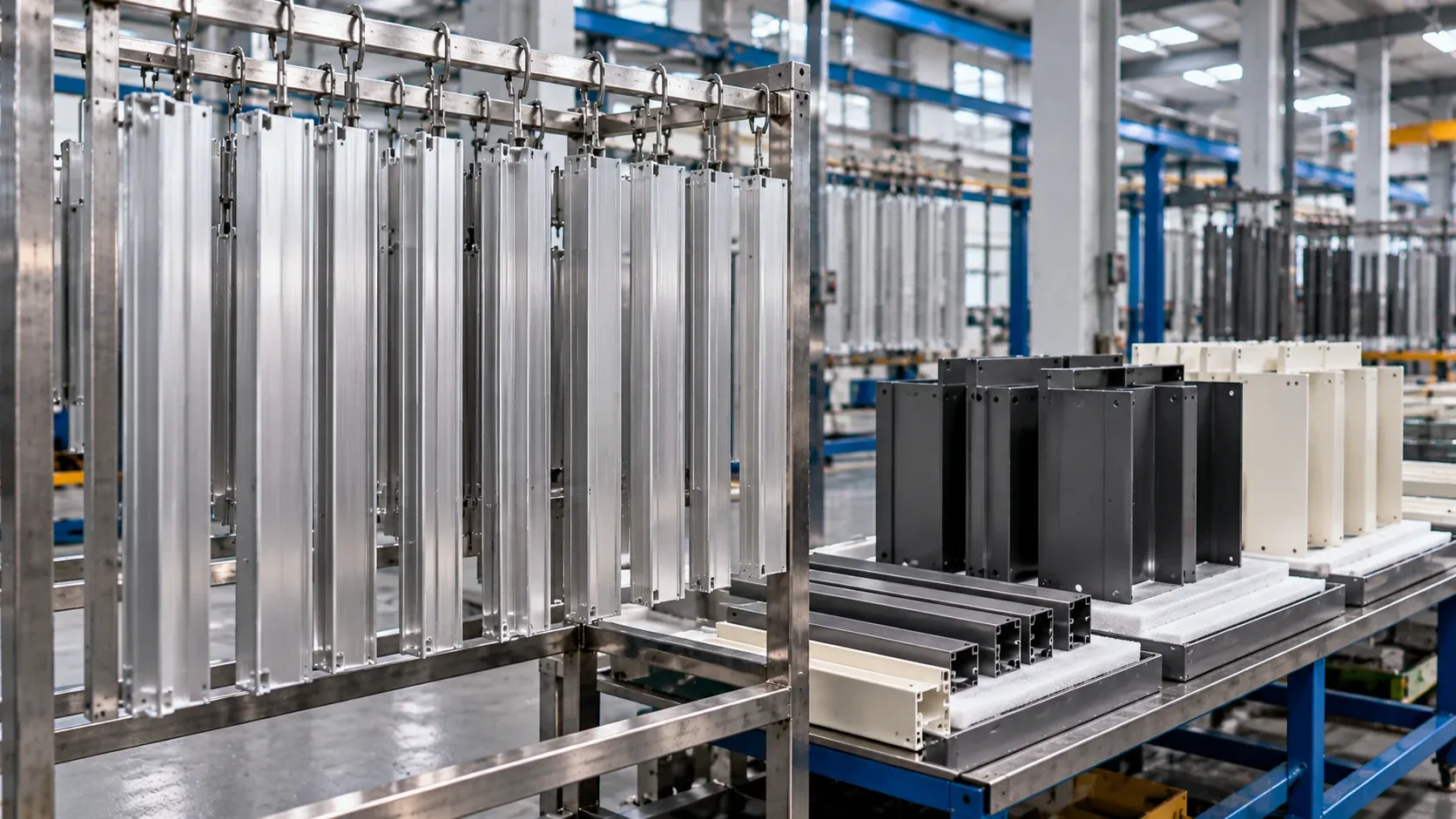
Both routes protect and color aluminum, but they do fundamentally different things to the surface: anodizing converts the aluminum itself into oxide �� the coating grows from the metal and is integral to it �� while powder coating builds a polymer layer on top of the surface. Neither is universally better. The decision follows the part's tolerance budget, its mechanical and UV duty, its color requirements, and the volume it runs at.
What is each route actually doing?
Anodizing grows the aluminum surface into a controlled oxide layer electrochemically. The coating cannot chip or peel because it is the metal, restructured; it is hard, abrasion-tolerant, and thin �� which is why it sits inside tight dimensional budgets. The route's scope runs from thin films to hard coats; our Type II guide covers the decorative-protective middle of that range.
Powder coating electrostatically applies polymer powder and cures it into a continuous film. The layer is thicker, forgiving of surface imperfections, and available in a far wider color, gloss and texture range �� at the cost of dimensional build and a surface that can chip where impacted.
Side-by-side on the inputs that matter
Input | Anodizing | Powder coating |
|---|---|---|
Dimensional build | Thin film inside tight budgets | Measurable build; tight tolerances need masking or design allowance |
Abrasion / metal contact | Hard metallic oxide; excellent on sliding and handled surfaces | Good general wear; can chip under point impact |
Color range | Dye families and electrolytic tones; metallic character | Broad palette, gloss levels and textures |
UV and outdoor aging | Natural and anodic colors hold well; dyes vary with sealing quality | Formulation-dependent; outdoor grades exist |
Substrate | Aluminum (and titanium routes) | Aluminum, steel and more |
Electrical behavior | Insulating oxide | Insulating film |
Rework | Stripping re-exposes base metal | Burn-off and recoat |
Effluent boundary | Aqueous process; rinses and treatment | No deposition bath; wash and booth maintenance remain |
The three-route comparison places both inside the wider finishing landscape if your decision also includes plated coatings.
Where each route wins
Anodizing wins where the metal should remain visible and metallic, where abrasion and handling dominate, where tolerances are tight, and where outdoor aging behavior of the oxide is trusted. Architectural, marine-adjacent and precision-instrument work is its home ground.
Powder coating wins where color breadth and texture matter, where the substrate mix includes steel, where surface imperfections need hiding, and where film robustness against general weathering with a thick film is preferred. Enclosures, frames and large fabrications are its home ground.
What does the decision change in a line brief?
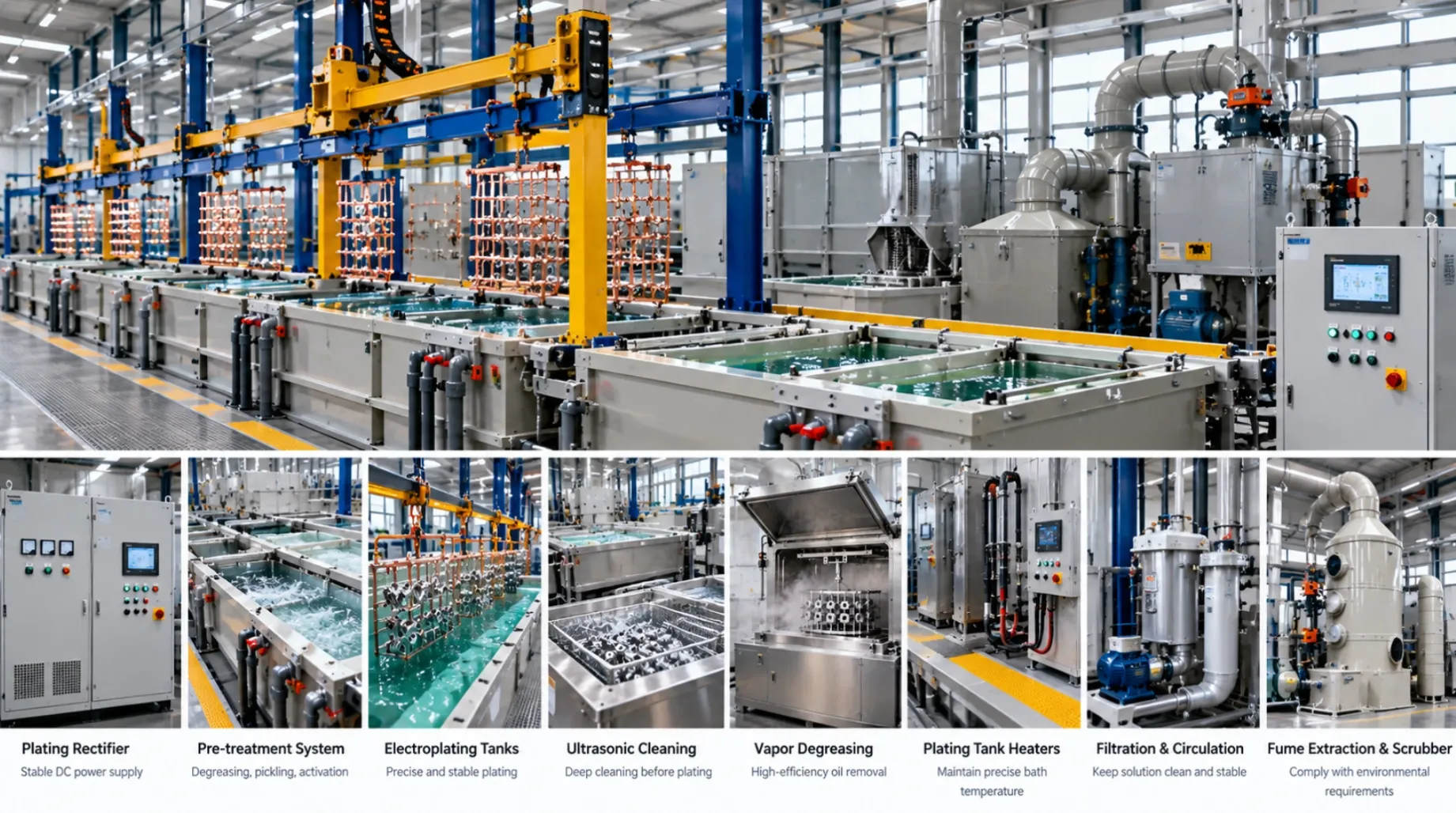
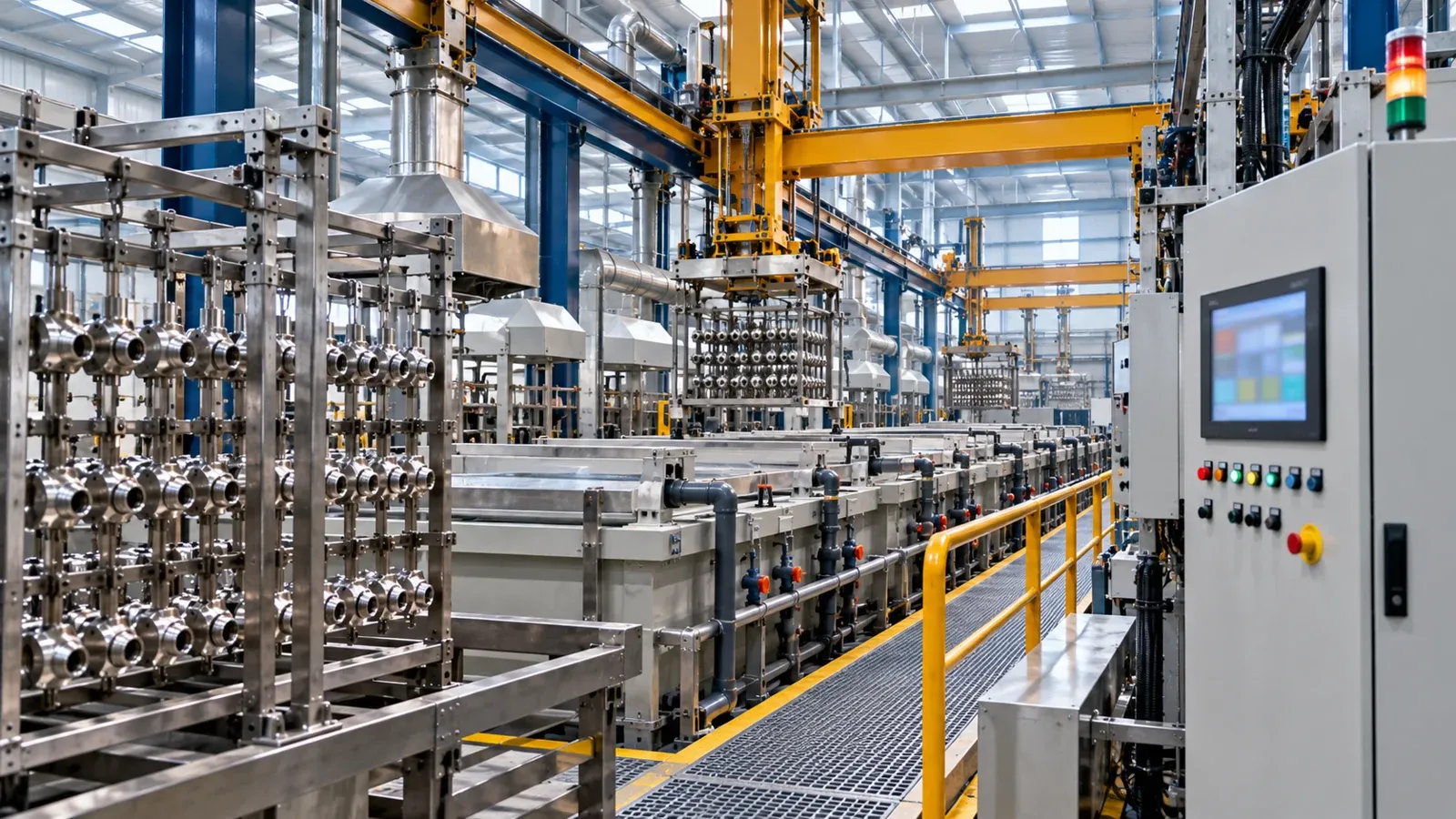
An anodizing line is an electrochemical plant: tanks, rectifiers, ventilation, effluent treatment �� the scope our quotation guide helps you compare. Powder coating is a different equipment family (booths, ovens, recovery), typically outsourced unless volume justifies its own plant. Name which route the product family actually needs before pricing either.
Where this does not fit
- Choosing by opinion rather than requirement: tolerance, duty and color needs decide; both routes are mature.
- Assuming one route serves mixed substrates: anodizing is aluminum-specific; mixed-material products need the powder answer or separate routes.
- Reading this as a coating-system selection: specific systems and acceptance belong to the product specification.
- Expecting anodizing economics without the effluent boundary: the aqueous treatment plant is part of the route's cost, not an option.
Questions You May Have:
Which is more durable?
Different failures dominate: anodizing resists abrasion and holds thin dimensions; powder resists general weathering with a thicker, chip-able film. Durability is a requirement question �� name the duty (abrasion, UV, impact) and the answer follows.
Can a part be both anodized and powder coated?
Duplex systems exist �� anodize as pretreatment and bonding base under paint or powder �� and the specification governs whether the combination applies and how it verifies.
Does anodized color fade outdoors?
The oxide itself weathers well; dye-based colors depend on dye class and sealing quality, and electrolytic/natural tones are the most stable. For color-critical outdoor work, name the color and the verification in the requirement.
Which is cheaper?
At low volume, outsourcing either is a per-part question. At high volume, anodizing's capital includes the effluent plant while powder's includes booths and ovens �� the volume, thickness and color requirements decide which structure fits. Compare total scope, not headline prices.
Technical references
- Practice description. Coating requirements, color and acceptance verification belong to the product specification and the applicable standards it invokes.
Get Proposal and Demo
Introduce your project with company, name, email and project country. Technical fields are optional. Describe the part families, their duty and tolerance requirements when available, and ask which route �� and which line scope �� fits the product plan.
Details can follow by sales email, or chat on WhatsApp. The buyer's guide compares line families in depth.
Image note: AI-assisted conceptual diagrams illustrate equipment or workpiece contexts; they are not an ES-PRO installation, customer reference or evidence of coating performance.