
Plating Process
Anodizing or Chemical Conversion for Aluminum Parts?
Compare anodizing and chemical conversion on aluminum by the drawing, electrical interfaces and finish purpose. Build a marked surface map for the line.
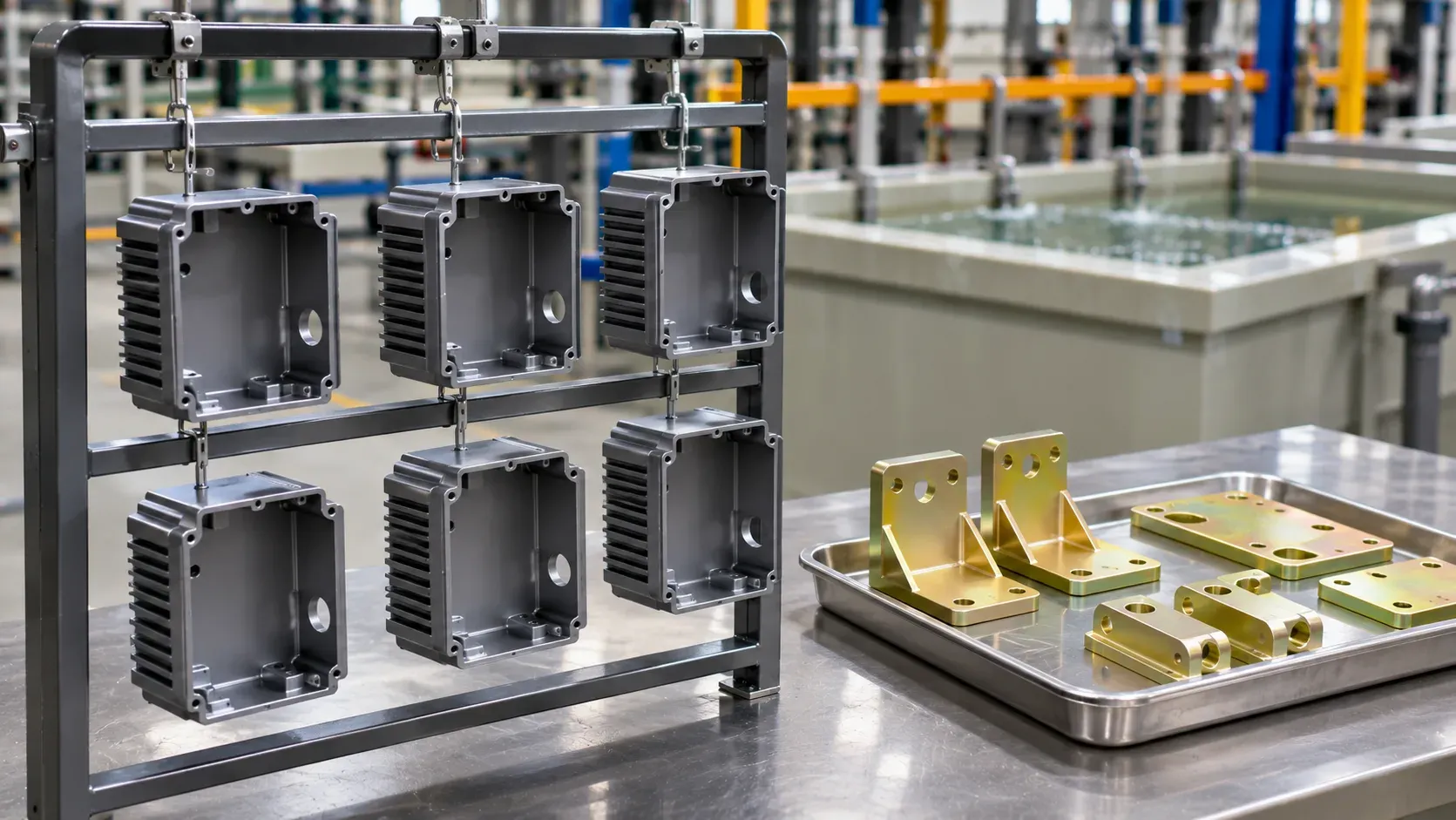
Choose anodizing or chemical conversion for aluminum from the drawing's surface function, specified finish and assembly interfaces. Identify where corrosion protection, appearance, paint preparation or electrical connection is required. Resolve any different finish zones with the design authority, then qualify the complete route and its inspection plan on representative parts.
The processes create different surface conditions. The Aluminum Anodizers Council describes anodizing as an electrochemical conversion of the metal surface to an anodic oxide. The MIL-DTL-5541 public scope concerns chemical conversion coatings formed by reaction with aluminum and aluminum alloys.
Mark surfaces by what they must do
Record the alloy and temper, incoming finish and each controlled surface. Identify assembly contacts, threaded or mating features, painted zones and visible areas. A general note saying “protect aluminum” leaves these functional differences unresolved.
Ask the drawing authority for the applicable specification, type or class where required, and the actual inspection conditions. A material or color description should not silently replace the finish designation. If the drawing calls for different treatments on different zones, include their boundaries and sequence in the approved process.
Surface need | Question for the design or quality owner | Equipment input |
|---|---|---|
Appearance | Which finish designation and reference define acceptance? | Qualified alloy range and process sequence |
Electrical interface | What surface and test conditions apply at the connection? | Masking, local treatment and inspection access |
Paint or adhesive interface | Which approved pretreatment and downstream system apply? | Stage boundary and permitted delay or handling |
Dimensional feature | What finished geometry is required? | Masking, fixtures and final measurement |
Worked example with a painted aluminum enclosure
Suppose an enclosure needs a specified painted exterior and a defined electrical connection at a mounting location. The buyer is considering two surface-treatment proposals. Establish the actual finish and electrical requirements before selecting a route.
Mark the external paint interface, mounting contact and mating features. Have the responsible authority define the permitted treatment at each zone and the final test. Compare the proposed complete sequences, including masking, preparation, treatment, any required finishing and paint application.
A treatment accepted under the paint system may need separate evidence at the electrical interface. Likewise, an acceptable connection surface does not establish the exterior's appearance or corrosion requirement. Keep the individual results tied to their marked zones.
Qualify the actual alloy and assembly
Use representative alloy, temper and incoming surface condition. For appearance, compare the agreed reference using the specified viewing conditions. For electrical or assembly requirements, use the approved specimen and setup.
If a part revision moves a connection or changes the alloy, review which earlier evidence remains applicable. Record any new masking boundary or inspection location. The line must reproduce the approved zones and sequence on the actual part family.
Put the finish map into the quotation
Provide the annotated drawing, qualified load pattern, finish designations and inspection plan. Ask the process supplier to identify the preparation, treatment and rinse duties for the selected route. Include the owner of any downstream painting or assembly work.
The Type II anodizing guide supports an anodizing-specific discussion. The anodizing and powder-coating comparison addresses a separate finish choice. Use the line setup guide to connect the selected wet route with facilities and handling.
Record alloy and temper · marked finish zones · invoked requirements · assembly interfaces · complete sequence · masking and fixtures · acceptance results · approval owner. Keep unresolved requirements visible in the bid basis.
Reconcile local finish zones before ordering tooling
Walk through the marked drawing with the design, process and assembly teams. Check where a mask ends, where a fastener or contact touches and where inspection must reach. Record whether the part can be inspected before an interface becomes hidden in assembly.
For a representative trial, label parts by route and preserve the same assembly configuration for the relevant comparison. Inspect the finish boundary as well as the center of each treated region. A successful electrical result at one contact should be tied to that contact location and the approved setup.
Finally, ask the supplier which assumptions the proposed rack and masking method rely on. A drawing change that moves a connection or changes a mating surface may require tooling and inspection revisions. Keep the finish map, tooling revision and release record together so the next production order uses the accepted configuration.
Procurement checklist
- A drawing marking electrical contacts, paint interfaces, appearance zones and dimensional controls.
- The alloy, invoked finish designation and acceptance authority for every local finish zone.
- A tooling and process-stage proposal that explains how each zone is exposed, masked and inspected.
FAQ
Can I choose the finish from the desired color alone?
Confirm the specified appearance together with the functional, assembly and dimensional requirements.
Can one generic treatment cover paint and electrical contacts?
Have the responsible authority define the accepted condition and test for each interface.
Should an alloy change be reviewed?
Compare it with the qualification basis and identify which appearance, process or functional checks need repeating.
Discuss an aluminum finish map
Share the drawing and functional zones. Include the alloy, finish designation and assembly tests. Send marked drawings by sales email, or discuss the project on WhatsApp.


